Contact Information
M/C 652
Champaign, IL 61820
Research Areas
Research Interests
Research in my lab aims to bridge the gap between basic and applied science, investigating how historical environmental shifts and landscape attributes have shaped the evolution and distribution of reptiles and amphibians and how this history can integrate with management practices that build resilience in contemporary populations. These questions are explored in biodiversity hotspots, including southwestern Appalachia and the island of Madagascar, using genomic, geospatial, and ecological approaches to document, describe, and ultimately protect reptile and amphibian diversity on a rapidly changing planet.
Research Description
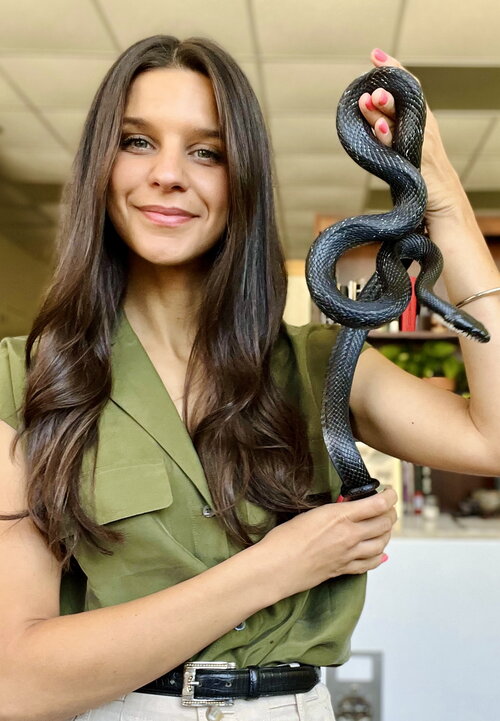
Arianna Kuhn is an Assistant Research Scientist and the Vertebrate Curator at the Illinois Natural History Survey (INHS). In her Herp Biodiversity & Global Change Lab at the INHS, students get to engage with collections, lab and field-based experiences that span topics in systematics, conservation, population genetics and evolutionary genomics to document, describe and monitor reptiles and amphibians in a changing world. Currently, her lab is exploring these topics in on the island of Madagascar, southwestern United States, Mexico and right here in Illinois! Dr. Kuhn is passionate about connecting students on campus with hands-on experiences in the INHS Biological Collections through workshops, independent research projects, and community building activities.
Dr. Kuhn has ongoing projects that address the following questions; interested students, faculty and staff are encouraged to contact her at alkuhn@illinois.edu:
(1) Biodiversity and Systematics. Major Question: How does biological diversity originate and persist through challenging conditions?
In the lab, we us genomic techniques integrated with ecological and natural history data to investigate the evolutionary processes and ecological drivers that have jointly produced the amazing patterns of biological diversity we see in our world today.
(2) Conservation Management. Major Question: How can we leverage natural history collections to inform conservation initiatives?
Our lab utilizes techniques from population genomics and geospatial systems, often coupled with information gathered from historical collections, to help monitor the genetic health and present-day connectivity of vulnerable populations.
(3) Population and Community Dynamics. Major Question: What can we learn from the past to inform predictions of future resilience?
The genomic signature of the past can inform population and community-wide responses to historical environmental change. Using forecast climate models, genetic and ecological data, we can make predictions about how future change will differentially impact reptile and amphibian species.
Education
Ph.D. in Evolution, Ecology and Behavior, City University of New York Graduate Center
M.Sc. in Biological Sciences, Villanova University
links
professional affiliations
Research Associate, Field Museum of Natural History
Research Associate, Virginia Museum of Natural History
Research Adjunct, North Carolina Museum of Natural Sciences
Research Associate, American Museum of Natural History