AAP Summer Research Fellowship in Integrative Biology
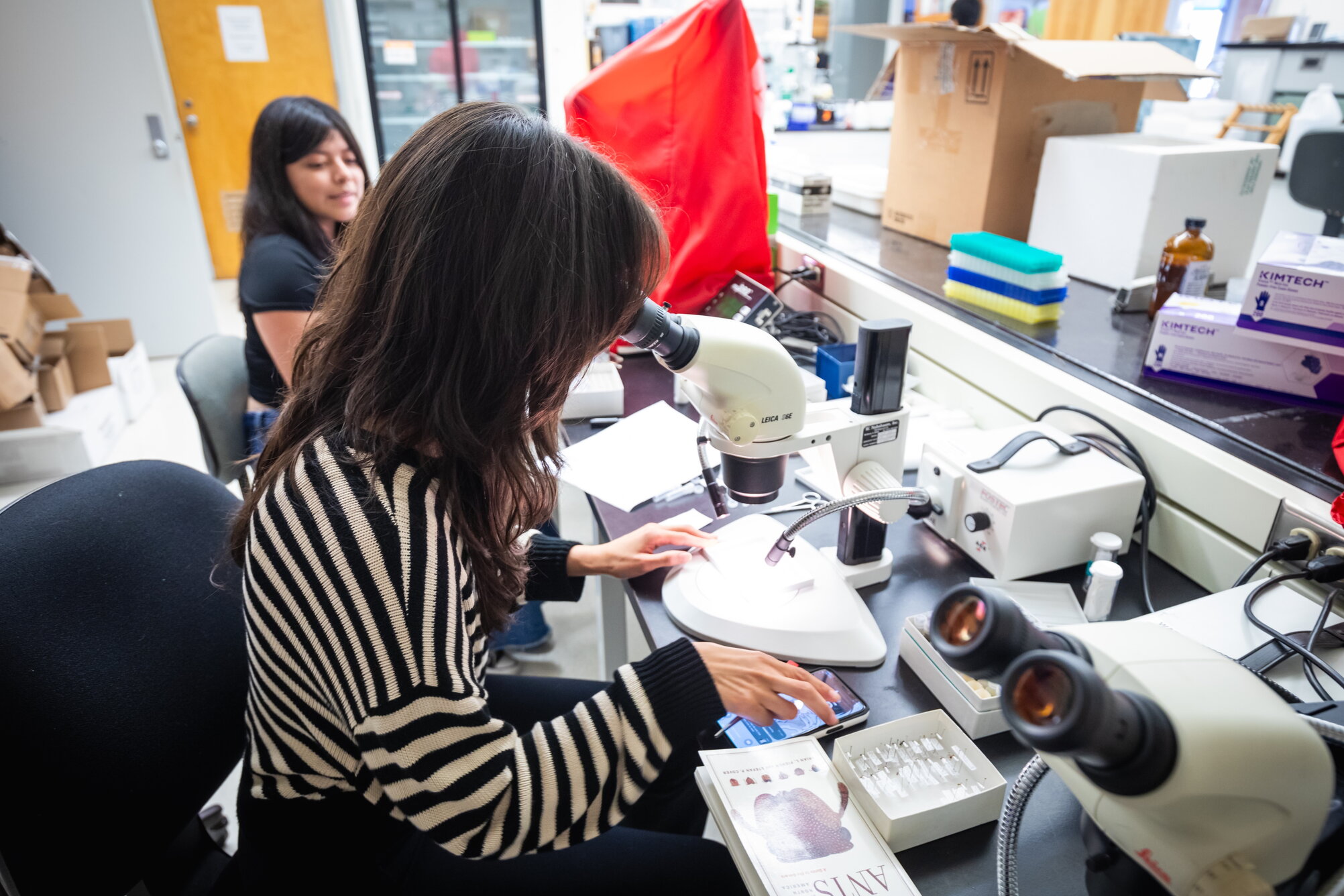
The AAP Summer Research Fellowship in Integrative Biology offers undergraduate students in the Access and Achievement Program (AAP) the opportunity to explore biological research with faculty, graduate students, and research staff in the School of Integrative Biology. This opportunity is designed for students with little or no research experience. During the summer, fellows will conduct research, attend regular professional development seminars, participate in a summer research symposium, and build their research network.
Goals/Purpose of the Fellowship
The primary goals of this fellowship are to provide students with:
- Hands-on experience conducting cutting-edge research in the biological sciences
- Exposure to the research process and tools used by academic researchers
- An appreciation for the challenges of academic research
- The opportunity to form personal and professional networks with faculty and other students
This fellowship is a 10-week research experience with a paid stipend of $7000 to be paid to student throughout the course of the summer.
See video interviews with past research fellows to learn more about this program.
Eligibility
Any undergraduate student (undeclared or biology majors; Freshman, Sophomores, or Juniors preferred) who is a part of the Access and Achievement Program is encouraged to apply for this program.
Requirements
Recipients of fellowship must be able to:
- Applicant must be an undergraduate student in good standing with the LAS Access and Achievement Program
- Students are expected to work approximately 40 hours per week for the duration of the fellowship, and therefore may not enroll in summer coursework or other part-time jobs
- Students must commit to the full 10-week research experience (May 25 to August 3, 2026)
- Students must attend research lab meetings as required by their research mentor
- Students must attend and present at the Integrative Biology Summer Research Symposium in late July
- At the end of the fellowship, students must write a brief summary of summer research experience
Application Timeline
Applications are due March 2, 2026 at 5:00 pm.
Please fill out the application form to apply.
Informational Meetings
Attend one of our information meetings to get tips on creating a successful application and have your questions answered.
- February 3, 2026, from 4:00 - 5:00pm, 2043 Lincoln Hall
- February 23, 2026, from 4:00 - 5:00pm, 2043 Lincoln Hall
Questions Regarding Fellowship
Contact the fellowship organizers:
Dr. Chris Holmes, Associate Director, Office of Undergraduate Research
Raymona Wicks, Assistant Director, Access and Achievement Program
Sean Beal, Academic Advisor, Access and Achievement Program
Dr. Ken Paige, Professor Emeritus, Department of Evolution, Ecology, and Behavior
Dr. Lisa Surber-Cunningham, Programs Specialist, Office of Undergraduate Research
What does the fellowship involve?
Structure of Program
Students selected for this fellowship will begin their 10 week research fellowship on May 25, 2026 During the course of the summer, you will learn laboratory techniques, form connections with other undergraduates conducting research, execute a research project designed by your mentor, be involved with outreach in the local Champaign-Urbana community, and present research at an undergraduate research symposium (for your friends and family to attend).
Criteria for Application
Students must be affiliated with the Access and Achievement Program (AAP). Freshman, Sophomores, and Juniors are encouraged to apply.
Time Requirements
- Students will conduct research for 10 weeks from May 25 until August 3, 2026. Exact fellowship start and ending dates are flexible and are dependent on mentor availability. Please notify the program coordinators if you have difficulty fulfilling this requirement.
- Attend and present at the iBio Summer Undergraduate Research Symposium. Here, you will give a short presentation on your summer work to a small group of peers and faculty mentors - occurs in late-July.
- Write a brief summary of summer research experience to be turned into the program organizers shortly following the completion of the summer fellowship.
Pay
Student will receive a paid stipend $7,000 to cover living expenses for the three month research experience.
Faculty Mentor List
Brian Allan
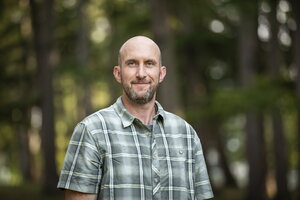
I am broadly interested in the ecology of infectious diseases and particularly diseases that are transmitted to humans from wildlife through infected arthropods (e.g., ticks and mosquitoes). I am also interested in the consequences of human-mediated global change on the risk of exposure to these parasites and pathogens.
Marianne Alleyne
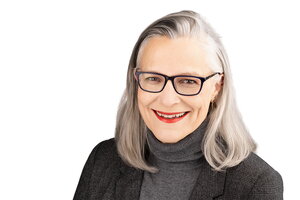
The ABC Lab is broadly interested in how insects can inspire us to design new material surfaces and robots. We combine field work, with lab experiments and imaging techniques, and prototyping through 3D printing.
Philip Anderson
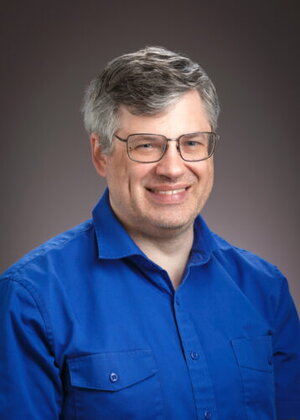
In my research program I synthesize biomechanical, paleontological and evolutionary methods to answer broad, macroevolutionary questions regarding biodiversity and morphological evolution. The form-function relationship is central to understanding the diversity of life on Earth. How an animal’s phenotype (structure, morphology, physiology) interacts with its environment is a key component of evolutionary theory and is vital to understanding both microevolutionary concepts, such as adaptation, and macroevolutionary concepts, such as cladogenesis and biodiversity.
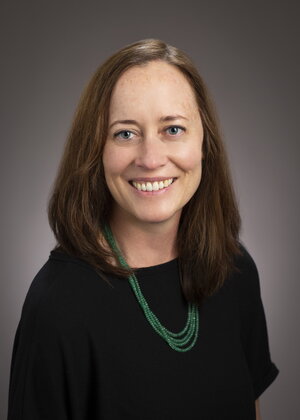
Alison Bell
Research in the Bell Lab is focused on understanding why individual animals behave differently from each other. In other words, why do individuals of the same species have different personalities? We study the proximate mechanisms underlying personality and the ultimate (evolutionary) consequences of personality using three-spined stickleback fish (mostly) as a model system.
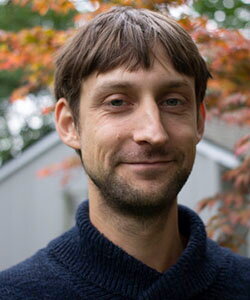
Matthew Brooks
The Brooks Lab studies how climate change will impact plant carbon-nitrogen balance with the goal of creating crops that are more resilient to future conditions. By combining genomic data with measurements of growth and productivity, the lab investigates how plants coordinate nitrogen use and photosynthesis under elevated CO2 and other anticipated stresses. A key focus is understanding how natural genetic differences influence the integration of these processes and how discoveries from model plants can be applied to crops. This research aims to improve nitrogen use efficiency, helping reduce fertilizer use and its environmental impact while supporting sustainable agriculture.
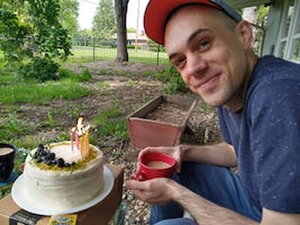
Steven Burgess
Over the next century the Midwest is predicted to have heavier early season rains, and warmer, drier summers. This is a problem, as our crops are not adapted to these conditions, resulting in yield losses at a time when we need to increase food supplies. However, hope is provided by the amazing ability of plants to adapt to climates across the globe, and a better understanding of these adaptations could aid crop improvement efforts. The Burgess Lab therefore combines physiology, biochemistry and synthetic biology to understand and combat the causes of yield losses resulting from climate change.
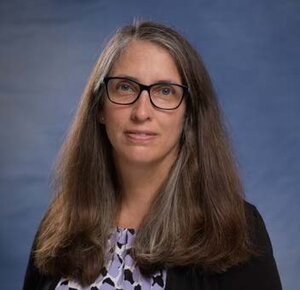
Carla Cáceres
We focus on questions at the interface of population, community and evolutionary ecology. At its core, our research focuses on how biodiversity arises, how is it maintained, and what is its functional significance from the scale of organismal traits to ecosystems. To accomplish this, we study the organisms that inhabit lakes and experimental ponds across the US. Our lab focuses on three related areas of inquiry:
- How do ecological and evolutionary processes interact to shape life-history variation?
- How do feedbacks between genetic and species diversity influence metacommunity dynamics?
- How do ecological and evolutionary processes interact to shape the distribution and abundance of disease
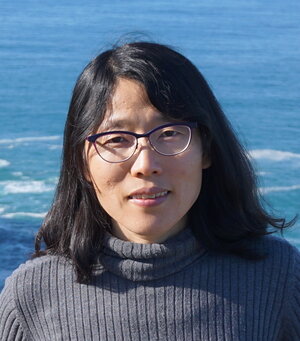
Li-Qing Chen
The Chen lab interested in understanding the control of sugar flux in plants. We aim to increase crop yield and biofuel production or improve crop resilience to stress conditions by engineering sugar flux using a combination of in vivo biochemistry, cell biology, molecular genetics, and synthetic biology.
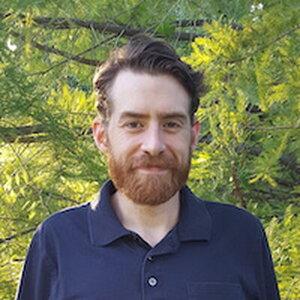
Adam Dolezal
The Dolezal Lab studies how ecological stressors, like nutrition, landscape composition/ecology, viral pathogens, and sublethal pesticide exposure interact to affect these pollinators. Working mostly in Midwestern agroecosystems dominated by row crop agriculture, his lab uses of a variety of approaches, including landscape ecology, ethology, physiology, and genomics to study these interactions and better understand how field-relevant stressors contribute to bee declines. Adam is also a first-generation college graduate, originally from Illinois, and a graduate of the University of Illinois, so he is passionate about helping students from diverse background achieve their goals in science.
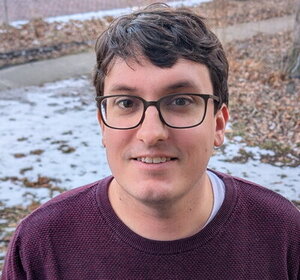
Matt Doremus
The Doremus lab explores the biology of arthropod-microbe symbioses, with a focus on heritable symbioses between arthropods and their maternally-transmitted endosymbiotic bacteria. These bacterial symbionts infect various tissues of most arthropods and rely on female host reproduction to spread through host populations. Many symbionts manipulate host reproduction in ways that favor infected females that spread the bacteria, including by turning male hosts into females through a process called feminization. We study the molecular mechanisms of host-symbiont interactions, the phenotypes that arise from these interactions, and the influence of environmental factors on symbiosis stability to get a holistic understanding of these common symbioses.
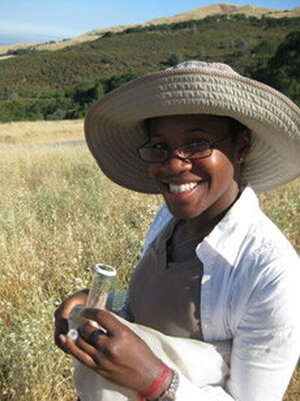
Alexandra Harmon-Threatt
The Harmon-Threatt lab is a diverse and welcoming group committed to understanding how environmental disturbances affect pollinators and the plants they depend on. With a combination of lab and field studies we have investigated responses to pesticides, fires, grazing, climate change, land use change, urbanization, and others. We are particularly interested in native ground-nesting bees which are the largest and yet most understudied group.
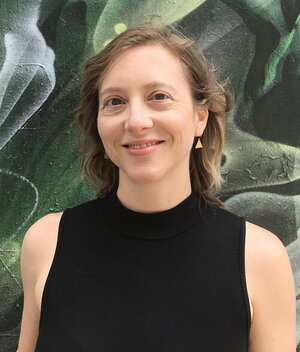
Katy Heath
The Heath Lab answers a variety of exciting questions in evolution, genetics, and ecology – mostly focusing on the symbiosis between leguminous plants (peas, beans, soybeans) and their myriad bacterial and fungal partners. We use experiments, sequencing, and field studies to understand how mutualisms coevolve and remain mutually beneficial over time and space and how these interactions are changing and will continue to change as the environment is rapidly altered by human activities. We work across scales to study how genes and mobile genetic elements (like bacterial plasmids!) drive rapid evolution, how these changes influence plant health, and also how plant-microbe interactions scale up to influence communities and even ecosystem processing. We have a large, engaged, and diverse group of scientists ranging from college freshman to graduate students to postdocs who interact routinely individually, in small groups, and in a large lab group setting – all of which helps new undergraduates get a foothold in science.
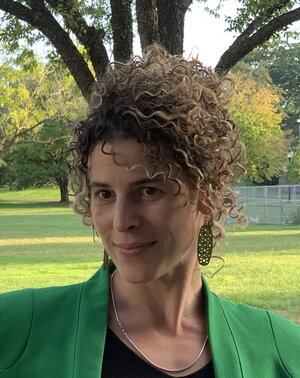
Rose Marks
In the Marks Lab, we explore the extraordinary strategies that plants use to survive without water. Our research focuses on "resurrection plants" which survive nearly complete desiccation of their vegetative tissues. These plants occur in some of the harshest (and most beautiful) environments on Earth. Our research aims to understand the mechanisms of desiccation tolerance, how they evolved, and the broader implications of these adaptations in changing climates.
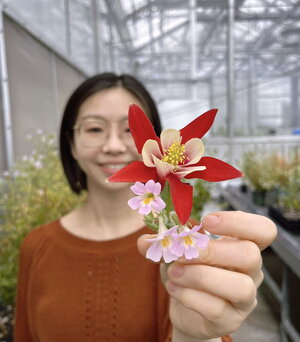
Ya Min
The Min Lab studies the molecular mechanisms that underlie the fundamental principles of plant development. Specifically, we combine developmental genetics, comparative morphological analysis, transgenic manipulation, synthetic biology, high-resolution quantitative live-imaging, and sequencing to understand how flowers are formed and diversified.
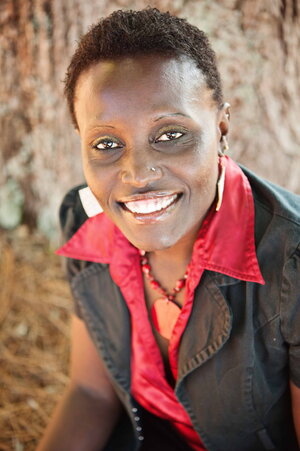
Esther Ngumbi
I am interested in understanding the multifaceted uses of chemical signals (both volatile and non-volatile) by herbivores, natural enemies, plants and their associated microorganisms and insects. Moreover, my research on beneficial soil microbes seeks to find microbial-based solutions for improving crop production, alleviating drought stress in crop plants and sustainable pest management.
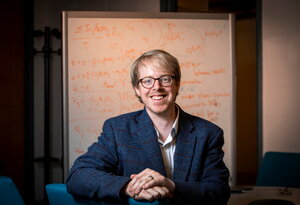
James O'Dwyer
The O’Dwyer Lab's focus is in ecological theory and complex systems, applied to a variety of taxonomic groups. We are interested in what kinds of theoretical models can explain patterns and phenomena in ecological communities, and in how to infer and validate these models with imperfect data. These data range from time series data, where species abundances are measured on relatively short, intragenerational timescales, to phylogenetic trees, where we use the deep evolutionary history of a group of organisms to infer processes, to spatially-explicit data at a snapshot in time. We are primarily a `dry’ lab, meaning that the tools we use are mostly computers, pencil and paper, and coffee.
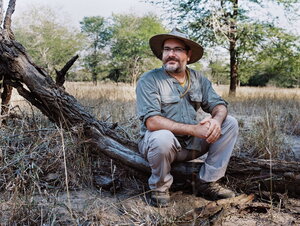
Andy Suarez
In the Suarez Lab, we use ants as model organisms to address a variety of questions in ecology and behavior. Some of current projects include examining trade-offs in investment into worker size versus number, the evolution of queen fertility signals, and the biomechanics of force production in "trap-jaw" ants.
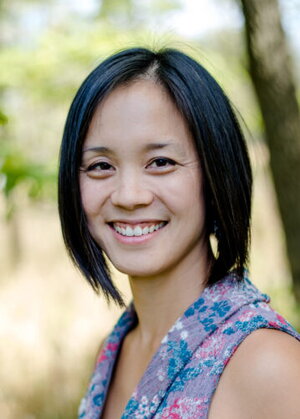
Wendy Yang
We are broadly interested in how human activities are changing how natural and managed ecosystems function and how ecosystem responses to global change can feedback to drive or slow future global change. Our research is in terrestrial biogeochemistry and ecosystem ecology with a focus on determining process rates and drivers of chemical transformations in the environment.
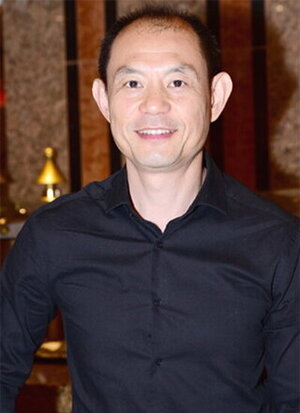
Joe Zhou
My research centers on the adaptive innovations that have made insects the most successful group of animals on Earth. These experiences shaped my perspective on how insects adapt to diverse biotic and abiotic challenges over evolutionary times.
The current focus of my program is the evolution of eusociality, in which individuals surrender their own reproduction rights to care for the offspring that are not their own, an evolutionary puzzle that has fascinated scientists for decades. Specifically, we investigate 1) the genetic underpinnings governing social behaviors in termites, and 2) the evolution of eusociality in the wood-feeding dictyopterans, i.e., wood roaches and termites. We are particularly interested in genes potentially affecting caste differentiation and termite behaviors, including aggression, social isolation, undertaking, learning and memory, foraging, and parental care.