Eight faculty members at the University of Illinois at Urbana-Champaign have been named to the 2019 Highly Cited Researchers list, a global listing of scientists who produced the past decade’s most influential papers...
Inaugural event provides opportunity to learn from outstanding scholars
The College of Liberal Arts & Sciences has established the LAS Dean’s Distinguished Lecture to provide wider opportunity for people to hear from faculty who are leaders in their field. The inaugural lecture...
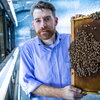
Scientists, including Adam Dolezal, placed honey bee hives next to soybean fields in Iowa and tracked how the bees fared over the growing season. To the researchers’ surprise, the bees did well for much of the summer. The colonies thrived and gained weight, building...
Eight professors at the University of Illinois at Urbana-Champaign, including two School of Integrative Biology faculty members: Andrew Suarez and Lisa Ainsworth, have been elected 2019 Fellows of the American Association for the...
What: “Tuning up photosynthesis” a hybrid scientific-explainer-slash-music-video created by the Gates Foundation to popularize the idea plants can be engineered in ways that improve upon nature.
Who: This work is being pioneered by RIPE—the Realizing Increased...
Iridescent appearance is ubiquitous in the insect world, and is used for a variety of functions, such as signaling to a mate or providing camouflage. A new study from the University of Illinois is exploring the link between iridescence and the biomechanical properties of beetles’ cuticle, in an...
Cowbirds outsource parenting to other species, but an innate password tells their children to copy cowbird songs. Chicago's Sarah London, Illinois' Mark Hauber and Tokyo's...
With the Researcher Spotlight, the Microbial Systems Initiative aims to introduce its readers to the breadth and diversity of research interests and potential growth opportunities on the University of Illinois at Urbana-Champaign campus. Katy Heath,...