Seven alumni from the College of Liberal Arts & Sciences have named recipients of the college’s 2019 annual alumni awards. The alumni represent a variety of backgrounds and degrees, and their achievements have clear links to their experiences at the University of Illinois. The recipients will...
Research Live! is a fun, fast-paced competition that celebrates the research of graduate students at the University of Illinois at Urbana-Champaign. Thirteen finalists competed in the public round of Research Live! on Tuesday, October 22 at the Krannert Center for the Performing Arts.
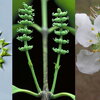
Gene sequences for more than 1100 plant species have been released by an international consortium of nearly 200 plant scientists, the culmination of a nine-year research project.
As their Latin name indicates, pineapples are truly “excellent fruits”—and thanks to a freshly completed genome sequencing project, researchers have gained a new understanding of how human agriculture has shaped the evolution of this and other crops.
Many new parents are familiar with terms like “baby brain” or “mommy brain” that hint at an unavoidable decline in cognitive function associated with the hormonal changes of pregnancy, childbirth, and maternal caregiving. A new study of parental care in stickleback fish is a reminder that such...
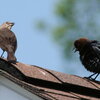
Researchers at the University of Illinois have shown through a multi-year study that cowbirds (Molothrus ater) conform to Bateman’s Principle, which holds that reproductive success is greater in males than in females when they have more mates. Cowbirds are distinct from 99% of other bird...
Making important commercial or financial decisions can be a very difficult task, especially with a variety of perspectives and stakeholders to consider. Dr. Marianne Alleyne, assistant professor in entomology, and Molly Sturgis, graduate student researcher in industrial and enterprise systems...
The risk of some mosquito-borne diseases can go up with increased rainfall, entomology professor Brian Allan said. However, excess rainfall can reduce the number of mosquitos that hatch in stormwater catch basins, such as the Culex species that carry West Nile virus.