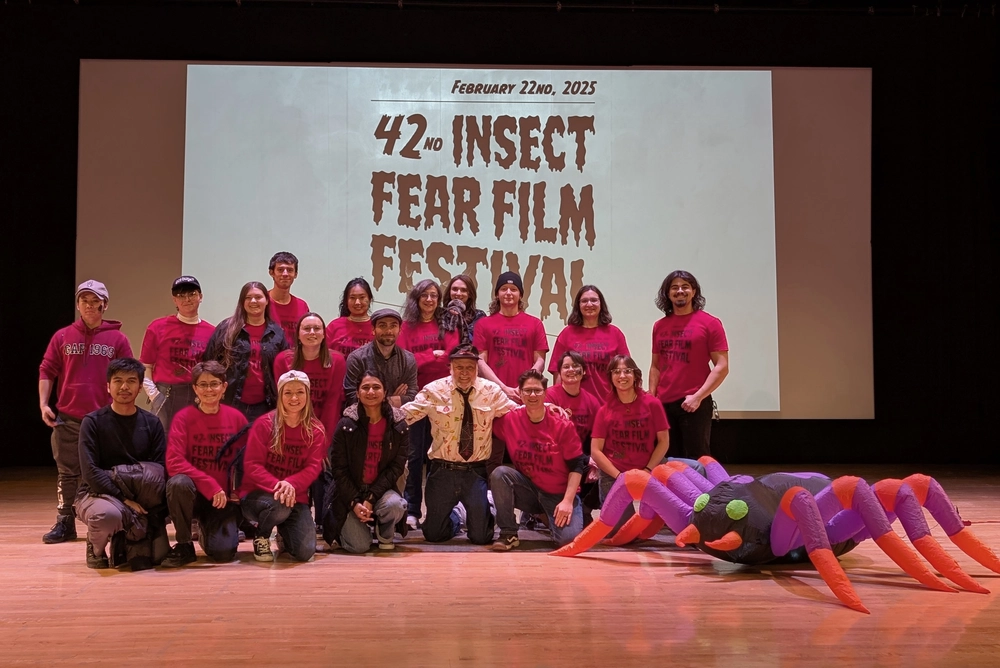
The Entomology Graduate Student Association (EGSA) has long been one of the Department of Entomology's top ambassadors to the community, connecting the public with the world of insects through hands-on outreach and education. This past spring, those efforts were recognized with the University of Illinois Campus Award for Excellence in Public Engagement in the Student Team category, honoring the graduate student organization for its longstanding commitment to engaging communities across Illinois.
The recognition from the University reflects decades of work by graduate student volunteers who represent both the Department of Entomology and the University of Illinois at local schools, libraries, museums, community festivals and campus events. For over 40 years, EGSA has organized and conducted outreach activities, providing a public engagement portfolio that spans decades while consistently promoting a greater understanding of the scientific and cultural importance of insects.
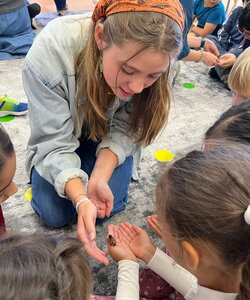
Today, EGSA’s outreach continues to grow. In 2024 alone, EGSA attended or hosted more than 40 in-person events throughout the Urbana-Champaign region. This included designing presentations for audiences ranging from school classrooms and summer camps to community charity events, along with field trips to the University of Illinois Pollinatarium. Graduate student volunteers also mentored students participating in science fairs, developed programming for the Urbana Park District, hosted events for the Champaign Public Library and participated in community celebrations such as the Emergence Convergence Festival and an overnight moth identification program at Allerton Park.
“Sharing insect knowledge and providing a positive experience with insects with the public is one of my favorite parts of EGSA,” said EGSA member Jena Ostendorf. “I enjoy seeing how students grow more comfortable interacting with live insects. As an outreach coordinator for EGSA, I have had many opportunities to inform and inspire the future generation of entomologists. I know that a younger me (who aspired to be an entomologist) would have adored having EGSA visit her school. Every time I go to an outreach event I hope to inspire or empower a student to become an entomologist.”
A centerpiece of many outreach events is EGSA's insect petting zoo, featuring a rotating collection of fourteen species of arthropods. Among the species are cockroaches and tarantulas that are acclimated to human interaction and can be safely handled by visitors, including school-aged children. The program's goal is to change public perceptions of arthropods by providing opportunities for people to interact with animals they might otherwise fear or misunderstand. Through these experiences, graduate student volunteers help demonstrate the ecological importance and diversity of one of the planet's most successful groups of animals.
EGSA's signature outreach effort is the annual Insect Fear Film Festival (IFFF), which has become a longstanding tradition at Illinois. Organized and run by graduate students, the festival combines film with science education. This past year’s theme was Insect-Human hybrids and featured screenings of Sectaurs and Infestation. Beyond the screenings, people attending could engage with the insect petting zoo, arts-and-crafts activities, exhibits from the Illinois Natural History Survey Insect Collection and interactive demonstrations with the Beckman Institute's BugScope program. The BugScope program allows visitors to view insects under a scanning electron microscope. The event also features a popular K–12 insect art contest that showcases the creativity of local students, with winning prints framed and hung on the third floor of Morrill Hall after the event.
“More than forty years ago, when we held the first Insect Fear Film Festival, no one knew with any certainty whether there would be a second or third or subsequent Insect Fear Film Festival; the idea that an entomology department could hold an outreach event for the general public based on pop culture depictions of insects was completely novel and untested at the time,” said Entomology Department Head May Berenbaum. “Four decades later, the test data are in and the success of this approach is evidenced by crowds that come every year to our event (more than 800 for the 43rd IFFF!) and by the widespread creation of similar insect festivals throughout the United States and elsewhere. Fortunately, Hollywood keeps churning out insect exploitation films, so we'll never run out of material to showcase!”
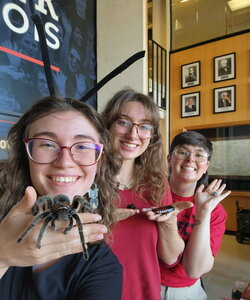
Beyond community outreach, EGSA also supports education and research within the university. The group's arthropods are available for undergraduate and graduate research projects requiring live specimens. Experienced volunteers provide animal husbandry and handling training for new members in exchange for future assistance with animal care. In 2024, EGSA outreach volunteers also represented Illinois at the Entomological Society of America's annual meeting, where they spoke with prospective students, researchers and visitors while raising funds to support future outreach activities.
Leaders in the Entomology department noted in their nomination that EGSA's outreach benefits not only the communities it serves but also the graduate students themselves. Organizing events, communicating science to audiences of all ages, working with campus and community partners, and engaging with local media provide valuable professional experience that alumni have cited as helping them develop leadership, communication and organizational skills throughout their careers.
The Campus Award for Excellence in Public Engagement recognizes those collective efforts. In announcing the honor, the Office of the Provost and the Office of Public Engagement praised EGSA for work that is "greatly respected by our colleagues" and noted that the award recognizes the team's accomplishments in serving both the university and the broader community.
For generations of our alumni, EGSA's recognition reflects a tradition of public engagement that has long been part of Illinois entomology. As each new class of graduate students takes on responsibility for outreach, education and community partnerships, they continue a legacy of connecting people with the science of insects and sharing the department's expertise far beyond the classroom and laboratory.