For many pre-health students here on campus, choosing the right career path in healthcare can feel overwhelming. Physician assistant (PA) school offers one route into medicine, combining rigorous scientific coursework with clinical training, collaboration, and the flexibility to explore different specialties. But what does the journey from undergraduate Integrative Biology courses to PA school actually look like?
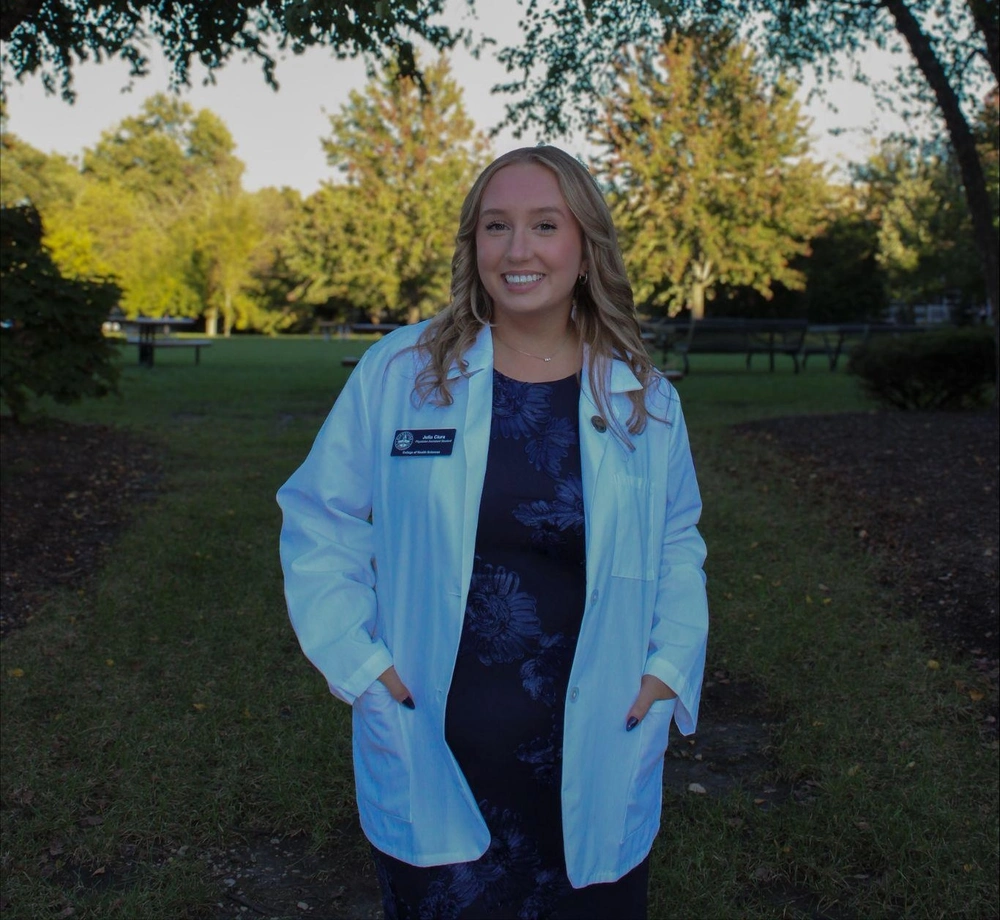
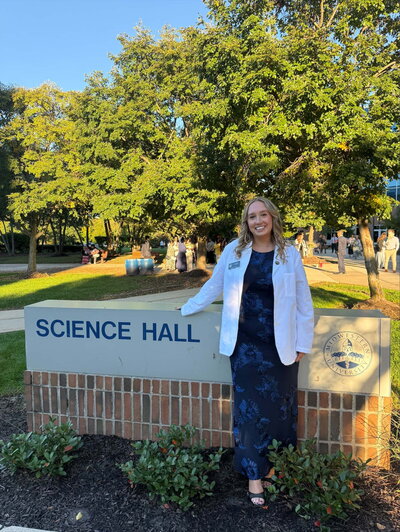
Julia Ciura, an Integrative Biology (IB) alumnus from the University of Illinois Urbana-Champaign (UIUC), sat down with us to share her experiences in PA school and how her IB background prepared her for the next step in her journey. She discusses what students can expect in PA school, how to prepare for the application process as an undergrad, and what initially drew her to the PA profession. From developing effective study habits to finding meaningful extracurricular experiences, Julia’s advice highlights the importance of resilience, curiosity, and pursuing a healthcare career for the right reasons.
Finding A Passion in Healthcare
What first inspired you to pursue a career as a PA? What drew you to the PA route over medical school or a nursing career?
My interest in healthcare started with my own family. As the child of immigrant parents who navigated the healthcare system without insurance, I saw how financial barriers and difficulties navigating the system could make accessing care challenging. Those experiences motivated me to pursue a career where I could help make healthcare more accessible and advocate for patients who may otherwise feel overlooked. When exploring different career paths, I was drawn to the PA profession because I have so many interests within medicine, so I love that I can explore and work in different specialties throughout my career without committing to just one. I also value the collaborative nature of the profession and the opportunity to work alongside physicians and continuously learn from them. Ultimately, the PA profession's mission aligned with my passion for bridging the gap in healthcare accessibility and felt like the best fit for the kind of provider I hope to become: someone who continues learning, works closely with other healthcare professionals, and helps patients feel heard and supported throughout their healthcare journey.
Building A Foundation In IB
How do you feel your IB coursework at Illinois prepared you for the science-heavy curriculum in PA school? Were there any classes that really stood out? Any that you wish you had taken?
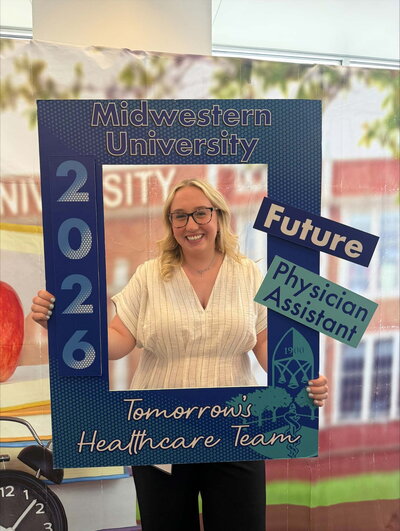
I am extremely grateful that I had such a science-heavy undergraduate curriculum because it gave me a small glimpse into the intensity of PA school and built the foundational knowledge required to understand the material. Anatomy and Physiology and Biochemistry have been especially helpful. My background in genetics has also given me a leg up in several of my courses, so IB 204 would take the cake! Looking back, I appreciate how much my undergraduate coursework challenged me because the rigorous courses gave me a strong foundation to build on in PA school.
IB students pursue a variety of interests. How do you think majoring in IB has shaped your perspective or given you a unique foundation for PA school compared to other majors?
I think IB really strengthened my analytical and critical-thinking skills. As you progress into upper-level IB courses, the focus shifts beyond memorizing information to applying what you know and understanding how different concepts connect. That experience has been especially valuable in PA school, particularly in Clinical Medicine, where you have to take what you know and apply it to patient presentations and clinical scenarios. This is paramount as
a future clinician. I think IB helped me develop a strong foundation for that kind of clinical reasoning and thinking, which is just as important as memorizing the material.
Looking back on your time at Illinois, were there any professors, advisors, research experiences, or campus resources that helped you prepare for not only the application process but also adjusting to PA school in general?
The IB advisors and faculty (Jessica Fink, Nick Anderson, Christina Swanson, Ben Clegg, Alison O’Dwyer, just to name a few!) were all so incredibly supportive of me, and they continue to cheer me on even after I’ve graduated. Knowing that I have so many people who saw me succeed at UIUC makes me even more driven to continue succeeding and making them proud. Their support also helped me build the confidence to pursue PA school and reminded me how important it is to surround yourself with people who want to see you grow.
But in all honesty, I am so thankful for every experience I had at UIUC, whether it was failing an MCB 450 exam, my research experience, my leadership in different organizations, or connecting with underclassmen as a peer advisor. Each experience taught me something different, from resilience and time management to leadership and working with others, all of which I continue to rely on in PA school and was able to speak about during PA school interviews. I am a firm believer that any experience can be a good experience if you let it be one!
Adjusting to the Demands of PA School
Now that you're in PA school, how would you compare the workload and academic challenges to what you experienced in your upper-level IB courses?
PA school is definitely a whole different level of intensity. I felt that my upper-level IB courses prepared me well for challenging science content, but the biggest difference is the sheer volume of information and how quickly you are expected to learn it. In undergrad, you generally have more time to revisit concepts and prepare for exams. In PA school, you have multiple exams in one week while learning entirely new material every day. It is not necessarily that every individual concept is harder, but you have to learn, retain, and apply so much information in such a short period of time. It has really challenged me to become more disciplined and intentional with how I study.
PA school covers a lot of information in a short amount of time. How have your study habits changed since undergrad, and what strategies have helped you keep up?
My study habits have changed significantly. In PA school, you learn so much material at once that you really have to stay consistent and study pretty much every day. I am grateful for the time-management skills I developed in undergrad, and I try to maintain some balance by giving myself Fridays off, but I typically spend another 20–30 hours per week studying outside of lectures.
One of the biggest adjustments has been developing the discipline to study a large amount of information in a short period of time. We have exams every week, so you really cannot afford to slow down or fall too far behind because there is always new material coming in. You have to learn how to prioritize, be efficient with your time, and keep going even when you feel like you need a break.
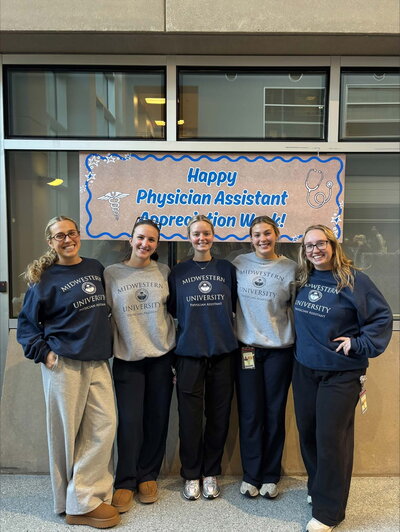
I have also had to learn what active studying actually looks like. In undergrad, it was easy to spend hours rereading notes or going over lectures, but in PA school, you have to be able to recall information and apply it, not just recognize it when you see it. I have had to become much more intentional about testing myself, identifying what I do not know, and spending my time on those areas. Tools like the Pomodoro timer and NotebookLM have been lifesavers for me because they help me stay focused and make studying large amounts of information more manageable. I am definitely still figuring out what works best for me, but learning how to study effectively, stay disciplined, and adapt to the pace has been one of the biggest adjustments.
For students who are curious about what PA school is actually like, what does a typical day look like for you, from classes and labs to studying outside the classroom?
My schedule is actually pretty similar to a block schedule in undergrad, just with a lot more information packed into each day! I am typically on campus from around 8–9 a.m. until 2–4 p.m., depending on the day (some days we get lucky and get out at 12 p.m.!). Our time includes primarily lectures, labs, case groups/workshops, and then studying outside of class is a big part of the routine. I already spend a lot of time on campus, so I will study at home or at coffee shops in my area, but I know many of my classmates stay at the library after class! I typically study at home an extra 2–5 hours, depending on the day, and then 6–8 hours on the weekends, with Fridays completely off.
We also typically have 2–3 exams each week, which are either in the mornings at 7 a.m. or after our classes are done for the day. Some days are more manageable than others, but it is definitely a full-time commitment beyond just the hours you spend in the classroom. Many of my classmates are still involved in clubs and outside activities (intramural sports is a big one for my cohort); I serve as the Vice President of my cohort and as the Student Ambassador for the American Academy for PAs, so some of my time during the week is dedicated to that as well!
What are some things about PA school or the PA profession that you think undergraduate students might not know or often misunderstand?
I think people sometimes misunderstand the scope of practice of a PA, why we are called physician assistants, and why someone might choose this path over becoming a physician. The word “assistant” can be misleading because PAs do much more than help physicians with tasks. We can evaluate patients, diagnose and treat medical conditions, prescribe medications, perform procedures, assist in surgery, and work across a wide variety of specialties.
PA school is also incredibly rigorous, covering a broad range of medical topics in a relatively short period of time. The PA profession was developed around expanding access to healthcare through collaboration with physicians. PAs take on significant responsibility in patient care while working alongside physicians and other healthcare professionals to provide comprehensive, team-based care. While physicians complete residency training to develop expertise in a specialty, PAs typically enter clinical practice after graduation and continue developing their expertise through clinical experience and lifelong learning.
One of the things I love about the PA profession is the opportunity to explore different specialties throughout my career while remaining an integral part of the healthcare team. Becoming a PA is not a lesser alternative to becoming a physician, but a distinct career path with its own strengths and meaningful contributions to patient care.
What has surprised you most about PA school so far? Has there been anything that turned out to be different from what you expected, either in a challenging or positive way?
I think what has surprised me most is how much you can learn in such a short amount of time, but also how much of PA school is a mental challenge. You expect the coursework to be difficult, but I do not think you fully understand how demanding it will be until you are actually in it. Some days, the hardest part is getting up, showing up, and finding the motivation to keep going when you feel like you are constantly trying to catch up or have imposter syndrome. You really have to remind yourself that this was something you worked relentlessly toward and dreamed about not long ago. I am learning that being successful in PA school is not just about how much you know, but also about resilience, consistency, and learning how to keep moving forward even when things get hard.
Advice for Future PAs
Are there any campus organizations, pre-health clubs, volunteer opportunities, or experiences you'd recommend for students who want to explore the profession and connect with others on a similar path?
I owe a lot of my preparation for applying to PA school to the pre-PA club at Illinois. It is an amazing resource because you can hear firsthand from upperclassmen who are going through the application process, learn from their experiences, and connect with alumni who are already in PA school or working in the field.
However, my biggest piece of advice would be to pursue something you are genuinely passionate about. I think it becomes very clear during interviews when someone has pursued an
experience just to add it to their resume versus when they can speak meaningfully about why it mattered to them. For me, I was involved in Her Campus, a women's organization focused on social media and marketing. Although it was not directly related to healthcare, I learned skills that I was able to connect to my interest in healthcare accessibility and education. You do not have to make every experience healthcare-related to become a strong PA applicant. Sometimes, the experiences that make you different are the ones that help you stand out.
A lot of sophomores and juniors worry about their GPAs, gaining patient care experience, and staying on track with application requirements. What advice would you give to students who are feeling overwhelmed by the process?
Take it one day at a time. You cannot change your GPA overnight or gain hundreds of patient care hours in a week, so focus on what you can realistically do right now. Work on becoming a well-rounded applicant and recognize that you bring more to the table than just your grades. If tests are not your strength, that is okay. Find opportunities to showcase your leadership, communication skills, service, and the other qualities that would make you a good provider.
And honestly, I know it is easier said than done, but pay attention to your mindset throughout the process. It is easy to get caught up in comparing yourself to other applicants or feeling like you are behind. Everyone's path looks different, and you do not have to have everything figured out all at once. Focus on making consistent progress, finding experiences that genuinely matter to you, and remembering why you wanted to pursue this profession in the first place.
The transition after graduation is always difficult, whether you’re continuing your studies, entering the workforce, or still figuring out your plans. Each journey comes with its own challenges, and the transition from IB courses to PA school is no exception. From adapting to a rigorous academic schedule to learning how to apply your biology knowledge to real-life cases, the experience can feel overwhelming. However, Julia’s experiences and insights show how the skills developed in IB, such as critical thinking, time management, resilience, and collaboration, can provide students with a strong foundation for success in healthcare and life in general.
For students considering the PA profession, Julia’s advice is clear: seek out opportunities to learn from others, gain firsthand experience in healthcare, and pursue activities that reflect your genuine interests. Every student’s experience is different, and there is no single path to becoming a strong PA applicant. So, try something new, discover what you’re passionate about, and remember that meaningful experiences can sometimes come from unexpected places. Above all, whether you’re a pre-health student or not, it’s important to take your academic journey one day at a time, recognize the value you bring beyond your GPA, and remember the motivation that inspired you to pursue your passions in the first place. No matter where your path takes you after Illinois, your time in Integrative Biology is an opportunity to explore your interests, discover new passions, and build skills that will stay with you long after graduation.