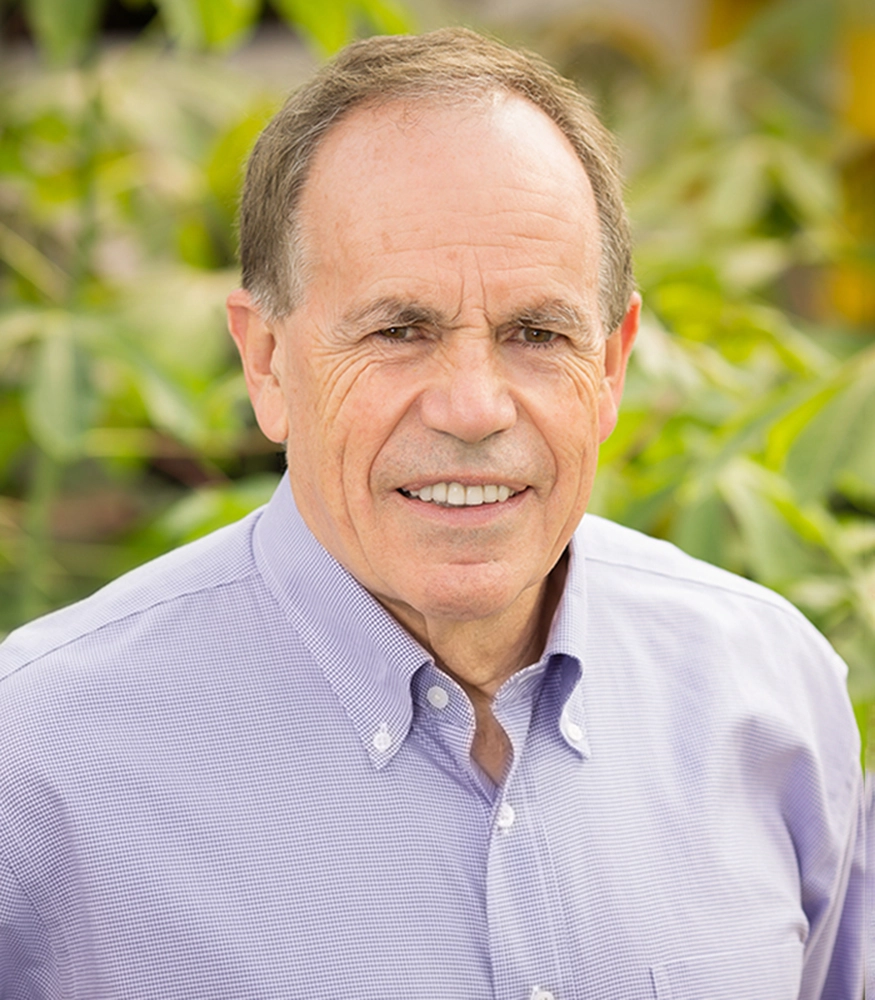
Plant Biology and The School of Integrative Biology (SIB) joins colleagues around the world in remembering Dr. Stephen P. Long, Stanley O. Ikenberry Endowed Chair Emeritus of Plant Biology and Crop Sciences, who passed away on Sept. 9, 2025, at the age of 75. His passing marked the loss of one of the world's most influential plant scientists, whose research transformed our understanding of photosynthesis, crop productivity, and the impacts of climate change on agriculture.
Born and raised in London, England, Long developed an interest in plant science through an inspiring high school biology teacher and a desire to help address global food shortages. After earning his bachelor's degree from the University of Reading and his doctorate from the University of Leeds, he built an internationally recognized career in plant environmental physiology. Before joining Illinois in 1999, he held faculty appointments in the United Kingdom, where his pioneering work established him as a global leader in photosynthesis and climate change research.
While Long's scientific influence extended around the world, the University of Illinois Urbana-Champaign became the home of many of his most significant achievements. As a professor in the Departments of Plant Biology and Crop Sciences, he built a world-renowned research program dedicated to understanding how plants respond to changing environments and how photosynthesis could be improved to produce more food for a growing global population. His work combined molecular biology, ecology, engineering, and computational modeling to tackle one of humanity's greatest challenges: feeding the world sustainably.
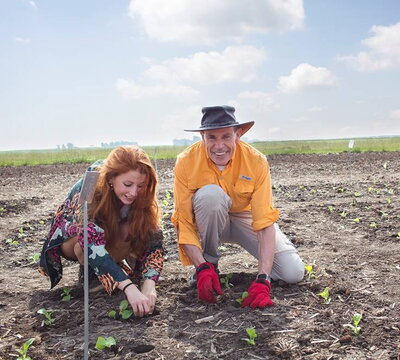
Long also helped establish some of Illinois' most impactful research initiatives. He founded and led the Realizing Increased Photosynthetic Efficiency (RIPE) project, an international collaboration that demonstrated new ways to increase crop yields by improving photosynthesis. The RIPE project is funded with the generous support of Gates Agricultural Innovations (Gates Ag One) to focus on increasing photosynthetic efficiency. Under his leadership, RIPE united scientists across multiple countries to develop technologies with the potential to improve food security for millions of people worldwide. He also played a key role within the Carl R. Woese Institute for Genomic Biology (IGB), where his collaborative approach brought together experts from diverse disciplines to accelerate discoveries in plant science. Long was instrumental in developing both the SoyFACE research facility and the Energy Farm, resources that continue to support groundbreaking agricultural research today.
Throughout his career, Long received many of science's highest honors. He was elected both a Fellow of the Royal Society and a member of the U.S. National Academy of Sciences—an exceptionally rare distinction that reflected his extraordinary contributions to plant biology. His research fundamentally changed how scientists understand the effects of rising carbon dioxide and ozone on crops and demonstrated that photosynthesis could be engineered to increase plant productivity, a breakthrough that reshaped the field. He consistently ranked among the world's most highly cited researchers, while also earning a reputation as a generous mentor whose influence lives on through the many students, postdoctoral researchers, and colleagues he inspired.
Plant Biology and SIB extends its heartfelt condolences to Stephen Long's family, friends, former students, and collaborators. His scientific discoveries will continue to shape the future of agriculture, while his commitment to mentorship and collaboration leaves a legacy across Illinois and the global plant biology community.
Those wishing to learn more about Stephen Long's remarkable career and share memories can visit the IGB memorial tribute, read the WCIA memorial, or contribute to the online remembrance board celebrating his life and accomplishments.