The topic of coffee is an extraordinarily lens through which to connect and integrate themes ranging from conservation biology and sustainability, global change, economic development, indigenous rights, supply changes, marketing, commodity processing and industrialization, and historical contingency. Many students enrolled in the CHEM 199 course were intrinsically fascinated by (and probably addicted to) coffee. The organizing theme of coffee chemistry provided a highly effective starting point branching out from students’ experiences and interests to explore these topics.
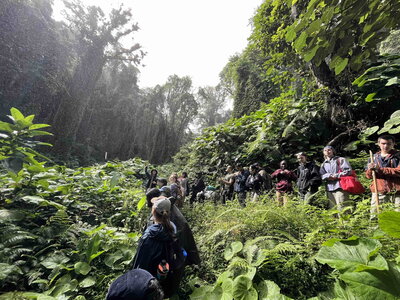
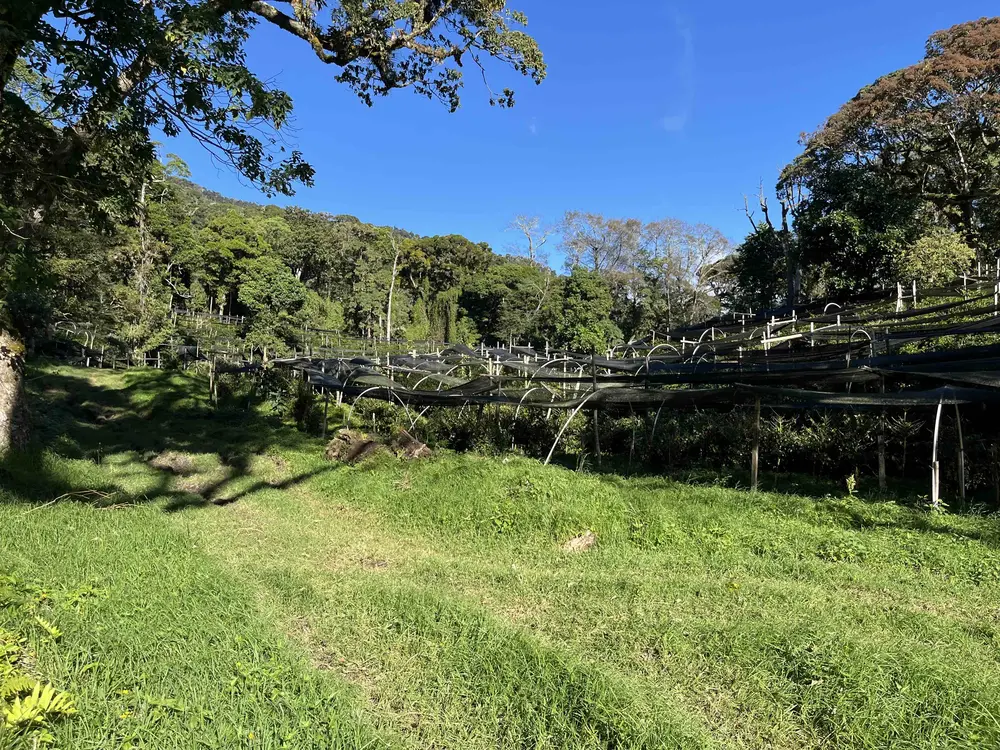
My own research has skirted the topic of coffee over the last three decades—from living with subsistence farmers in the Blue Mountains of Jamaica, to working on the forested lands of Hacienda La Esmeralda (HLE) in Panama, the most famous and successful coffee farm in the world. My collaborations in Panama facilitated the student tour of an HLE farm and a hike into the surrounding oak forest in Volcan Baru National Park. An on-site discussion with Price Peterson, the owner of HLE covered many topics. Notably the challenges for HLE in supporting the mostly indigenous and seasonal labor force. The success of HLE and its expansive holdings also prompted discussions of managing conflict between forest preservation in parks and economic development. HLE is also an example of how elevation strongly impacts coffee flavor and price—increasing pressure to convert remaining montane forests into plantation. One way to mitigate this conflict is to maintain a forest-coffee matrix on the farm through shade planting, while offsetting yield losses through eco-tourism. During the fall semester I arranged a zoom meeting with Melissa Mazurkewicz, Director of the Smithsonian’s Bird Friendly Coffee program to discuss how farmers are certified and benefit from this program. In the field, students were able to see this for themselves where coffee and quetzals coexist.
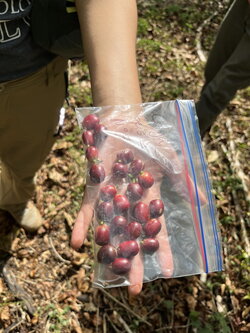
A second potential way to mitigate this conflict is through a greater understanding of coffee chemistry itself. Although high elevation coffee has a distinct and highly sought-after flavor (reaching $34,000 per kilo for HLE coffee), the chemical basis for flavor changes are not well-understood. Support from this course has allowed me to initiate a research project to characterize elevation changes in both the microbiome (bacteria and fungi) and the metabolome (plant and microbial chemistry) of HLE coffee. Co-analysis of these components will allow us to determine how the microbiome drives changes in chemistry that impact flavor. Identifying key microbial actors may allow future manipulation of coffee bean fermentation—the driver of coffee flavor—without the need for high elevation cultivation. While at the HLE coffee processing in plant in Panama, we were able to show students how this could be put into practice through the use of innovative fermentation reactors and cold rooms that alter these microbial practices.
This course has definitely changed what I think about as I sip my morning coffee. I hope it has done the same for our students.
Editor's Note: Chem 199: Chemistry of Coffee is a campus-supported transdisciplinary course, with a fall class and winter break study abroad component. Professor Jim Dalling taught a section of the course in the fall, along with faculty from Chemistry, Engineering, Food Science and International Education.