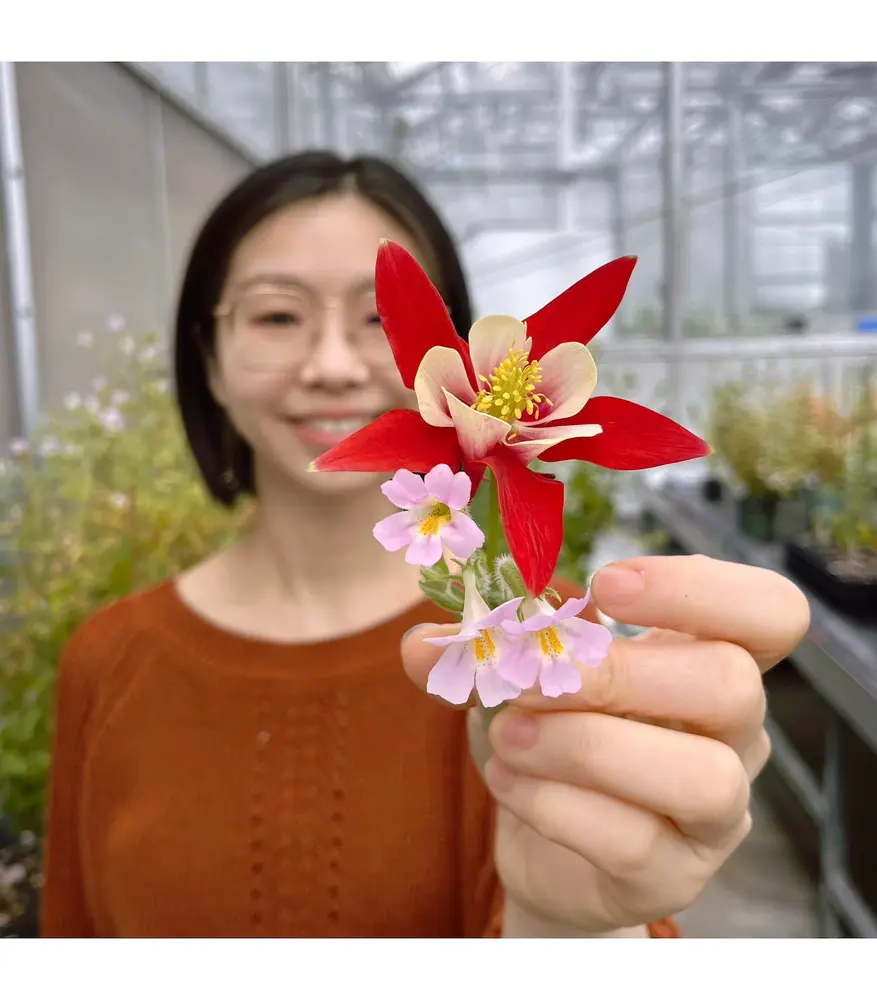
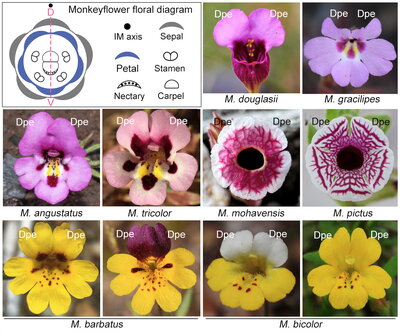
In a new opinion piece published in New Phytologist, Plant Biology Assistant Professor Ya Min (Minya) examines how flowers develop their distinctive shapes and symmetry. Titled “Floral bilateral symmetry: one axis, many details”, the article explores the molecular mechanisms behind bilateral symmetry, a common floral structure in which a flower can be divided into mirror-image halves along a single plane.
Minya focuses on the role of the CYCLOIDEA (CYC) gene family, which is associated with the development of bilateral symmetry across many flowering plant lineages. Although this pattern has evolved independently at least 130 times, the underlying mechanisms that regulate CYC genes and shape floral diversity are not fully understood.
By examining current research and identifying key unanswered questions, Minya highlights opportunities for future investigations into how flowers develop their forms and how similar traits evolve independently across plant species. Understanding these processes can provide broader insights into plant evolution and the development of specialized relationships between flowers and their pollinators.