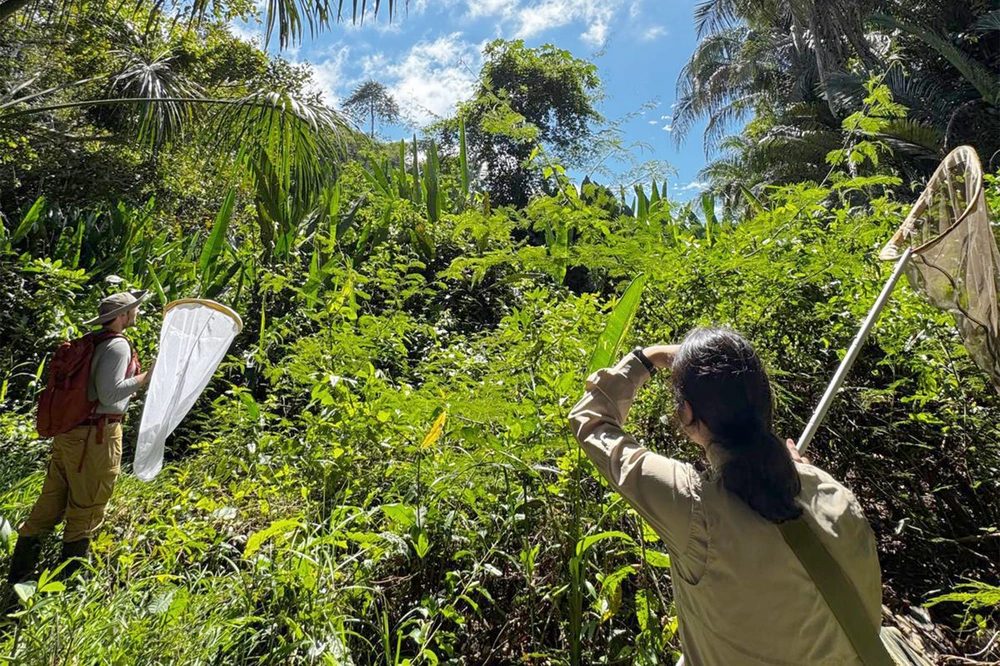
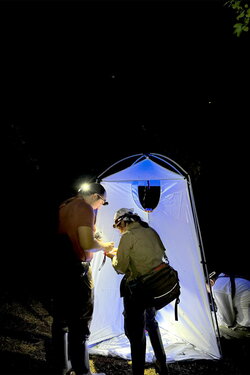
MADRE DE DIOS RIVER, Peru — It is one of our last collection nights in the Tambopata National Reserve in southeastern Peru and we are setting up light traps on a dock near our field station in the Amazon rainforest. The white light works like a false moon: insects fly toward it, and soon our white cloth is filled with beetles, moths, mosquitoes and grasshoppers, among other critters, with an occasional toad arriving to the bug party.
I am one of six lucky students selected to go on this excursion: four undergraduate and two graduate students. Our role is to help with the collection of insects, as well as curation and lab work. This trip was planned for four months, with various presentations on the Amazon ecosystem, the importance of studying insect diversity and field collection practices. Postdoctoral fellow Aaron Goodman and Ph.D. candidate Emmy Fiorella Medina-Espinoza helped manage this field course.
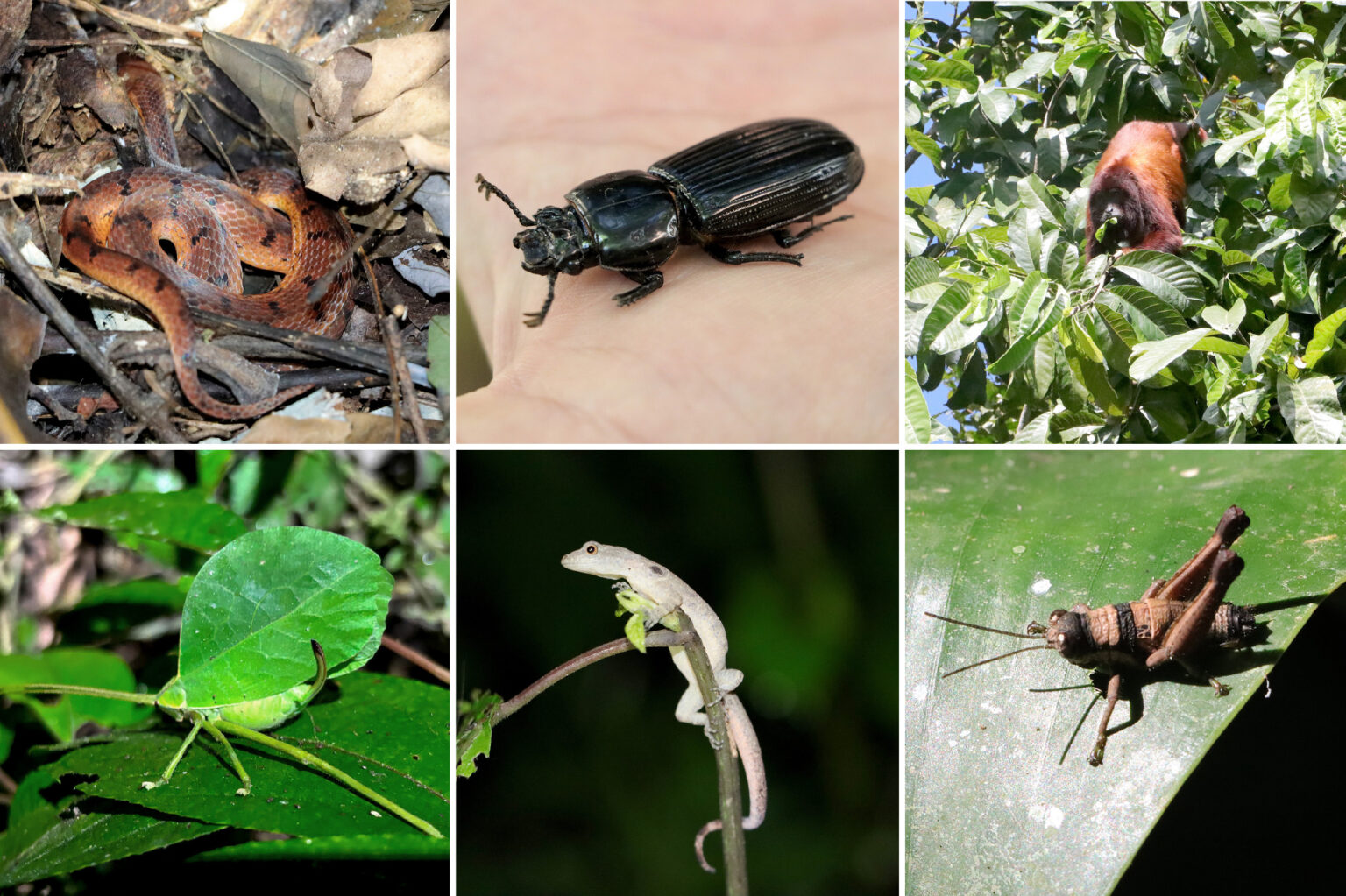
We traveled from the cornfields of central Illinois to this rainforest. When we stepped off the airplane in Puerto Maldonado, we could immediately feel the difference. In mid-July, it was less humid in the Amazon than in Illinois, shockingly.
Our mission tonight is to catch cockroaches, but our bigger objective is to experience the range of diversity and ecological significance of the Amazon rainforest. Entomology professor Dominic Evangelista, the principal investigator of the Roach Brain Lab at the University of Illinois Urbana-Champaign, initiated this field course to collect cockroaches and dragonflies from the rainforest.
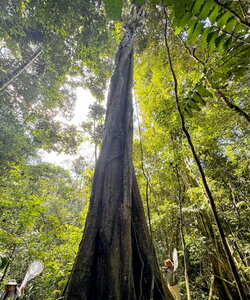
The roots of the rainforest’s tall trees run so deep they seem to hold the whole forest together. As we walk into the forest, we can see the roots peeking out of the ground and forming steps for us. The television documentaries I’ve seen did not prepare me for the real Amazon.
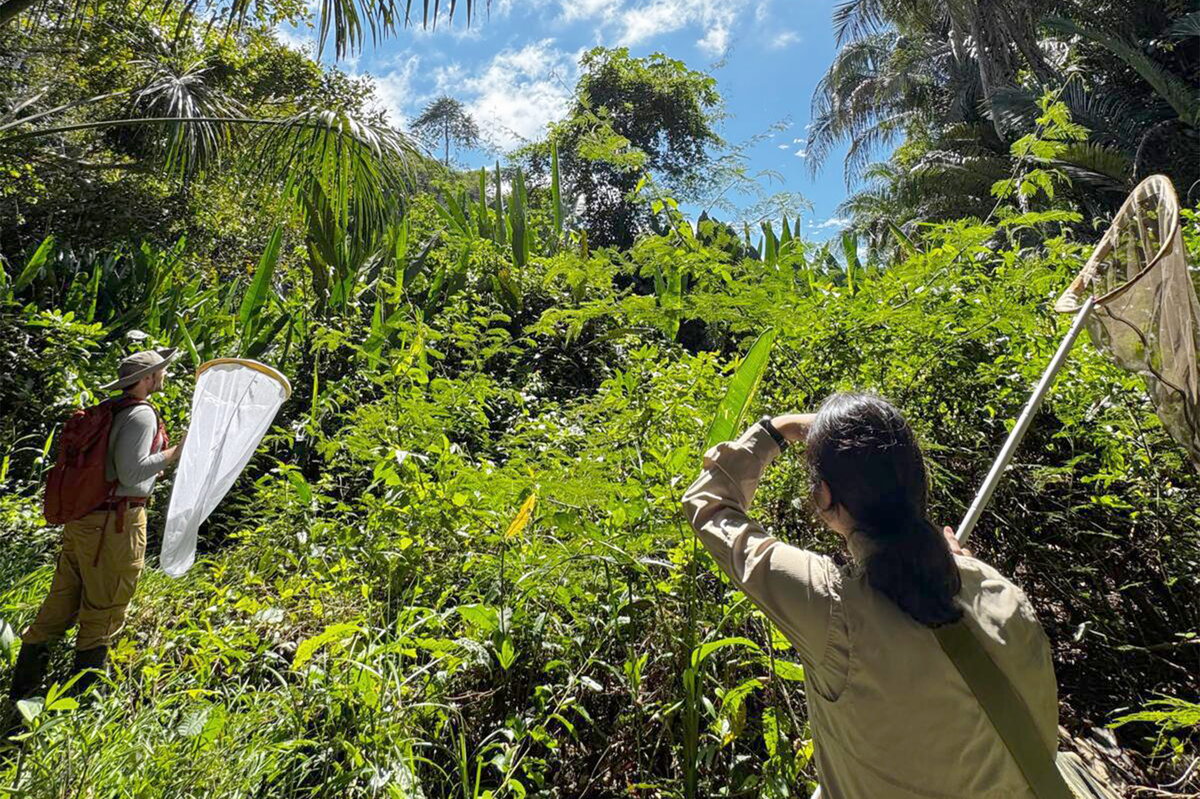
Collecting insects is not a glamorous job. We must wear headlamps, insect repellents, full-sleeve shirts, rubber boots and pants that won’t tear from the constant brushing against trees and shrubs. It also requires great curiosity and wonder, something everyone on the trip definitely has. On every collecting trip, whether we are capturing dragonflies with handheld nets or cockroaches by hand, we see fascinating creatures. One of our favorites is the occasional corpse of an insect infected by cordyceps fungi.
In our time in the Amazon, we have collected insects in several ways: by setting pitfall traps or light traps, or by walking long distances to catch insects by hand or with tools. We have mastered the skill of catching cockroaches using just our bare hands. It is an interesting feeling when a cockroach is in my tight fist, wiggling its legs and tickling my hand. Capturing dragonflies requires more precision and determination. Goodman taught us how to observe the flight pattern of dragonflies to catch them with our nets.
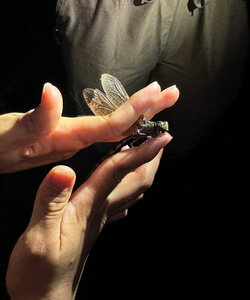
The most exciting part of collecting insects happens around the light traps. We surround the trap, wearing our headlamps and holding ethanol vials as we search for insects. We get to see brilliant displays of moth wing colors, mating insects and even insects preying on each other.
I am looking at the beautiful colors of moth wings when I notice a tiny brown insect. I cannot tell if it is a roach or a beetle. When in doubt, we collect, and so I pick up the insect with my hand and put it into my ethanol vial.
***
Every day at dawn, we are surrounded by the sounds of parakeets and macaws chirping away, and the rising howls of the howler monkeys. We leave our mosquito-net-covered beds and see the sky beginning to lighten, covered in blue and indigo shades, with a soft breeze. The silence of the night is quickly replaced by the bustling life of the rainforest and a golden yellow sunrise. It is truly one of the best wake-up calls for a sleeping visitor in the forest.
The caretakers and inhabitants of the rainforest regard it as a “sacred entity” and respect the ecological legacies it holds. Researchers and visitors are asked to respect the spiritual significance of the Amazon and its indigenous communities. “Whenever I enter the Amazon, I declare my intention and make sure to only take what I intended to collect, which are insects,” Medina-Espinoza says.
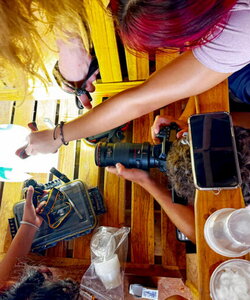
Scientific insect collection also requires researchers to follow Peru’s regulations for wildlife research and export. For specimens collected outside natural protected areas, researchers must obtain a permit from Peru’s national forest and wildlife service, or SERFOR, while collections within protected areas need authorization from the National Service of Natural Areas Protected by the State. SERFOR also oversees the export permits and verifies that the specimens were legally collected.
Back at the station, every specimen, whether it is collected at night or during the day, whether it is a cockroach or a dragonfly, must be curated. This is a delicate task, probably my favorite job to perform while I have my tea. All the specimens must be sorted into packets of ethanol, labeled with the date, location and method of collection and then passed to Evangelista for identification. We write down where each insect was found: in the leaf litter, on the bark of a tree or clinging to a plant. It is a slow, meticulous task, but this is where each vial containing a dead insect is transformed into useable data.
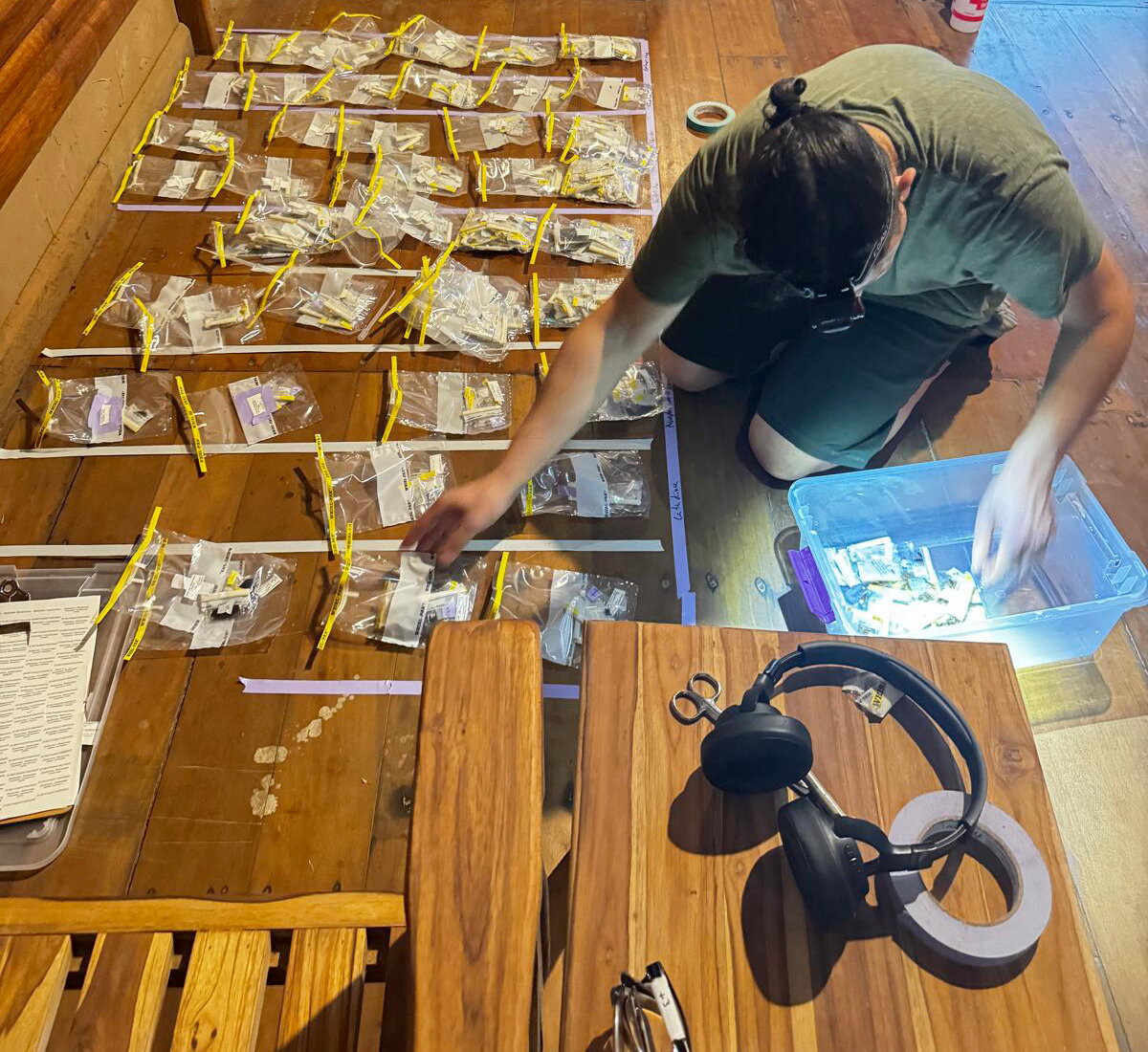
When I walk into the lab, I see the other five students wearing headlamps, drinking canned beer and curating. One person cuts the labels, another writes on them and a third prepares each ethanol packet. Two students are sorting the cockroaches into morphological species. It looks like a well-functioning cockroach-curation assembly line. It is an excellent example of teamwork, all while tolerating the humidity together.
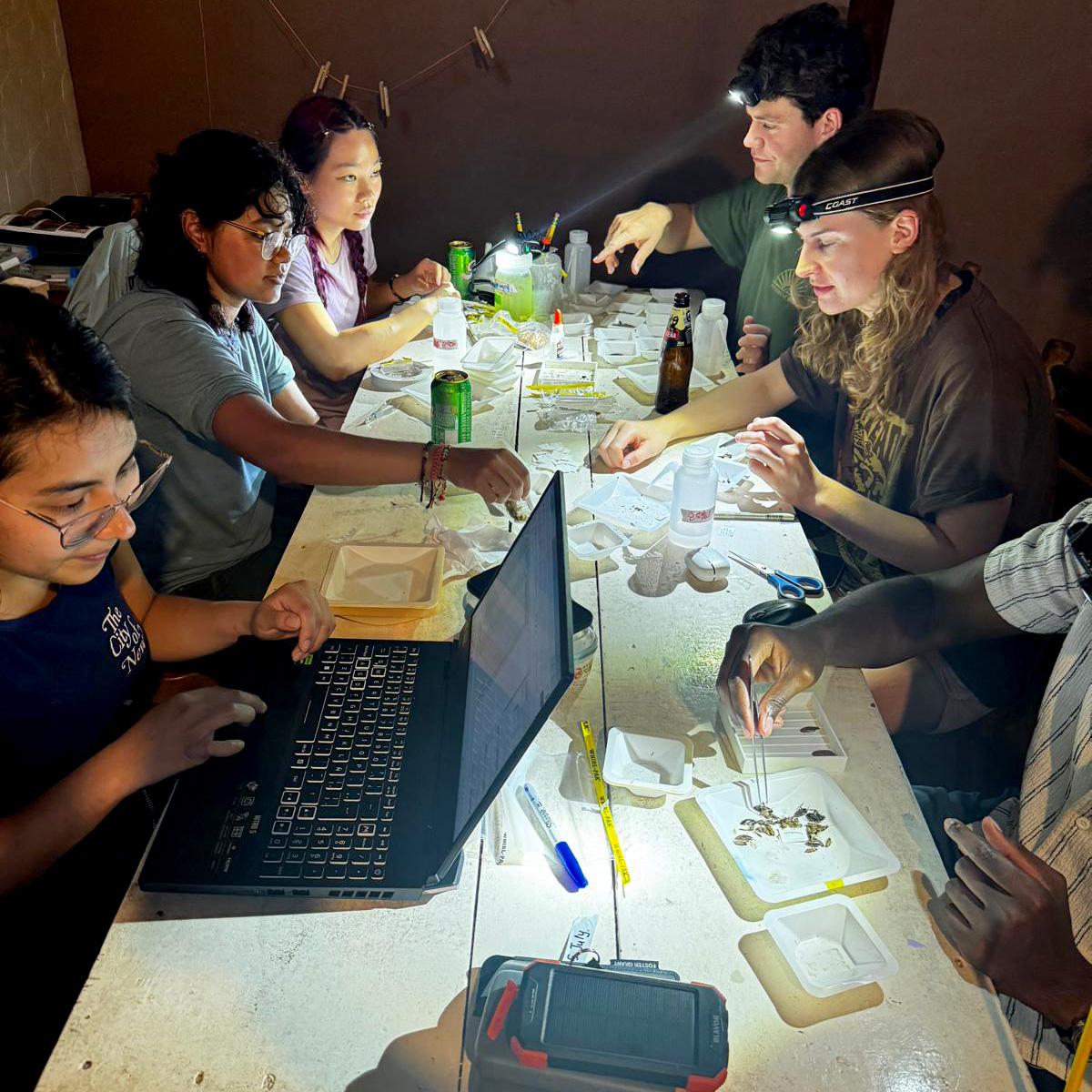
Expeditions like these advance the science of entomology. On one of our hikes, Evangelista said that if we knew enough about cockroach diversity, we wouldn’t have to capture them at all. We could simply look at them and know what species they are.
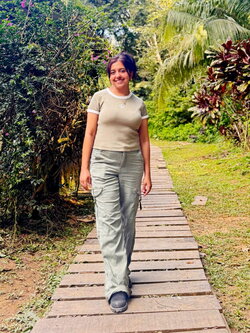
On the last morning of our expedition, Evangelista tells us that the insect I caught might be a rare cockroach from a genus Maraca that was last seen in 1974. Catching a rare cockroach on a once-in-a-lifetime trip to the Amazon was not on my 2026 bingo card, or any card for that matter. (We’re still waiting for final confirmation.)
These expeditions, though expensive and exhausting, provide great insight into why science is so important. While often curated in the lab, entomology does not originate there. The truth exists in the real world in a muddy port with orange butterflies flying all around. We will only find it if we go the distance and look closely enough.
Editor’s notes:
Subscribe to Behind the Scenes for short blog posts, photos and videos from Illinois faculty, researchers, students and staff about their work and lives. Send an email with “SUBSCRIBE BTS” in the subject line.