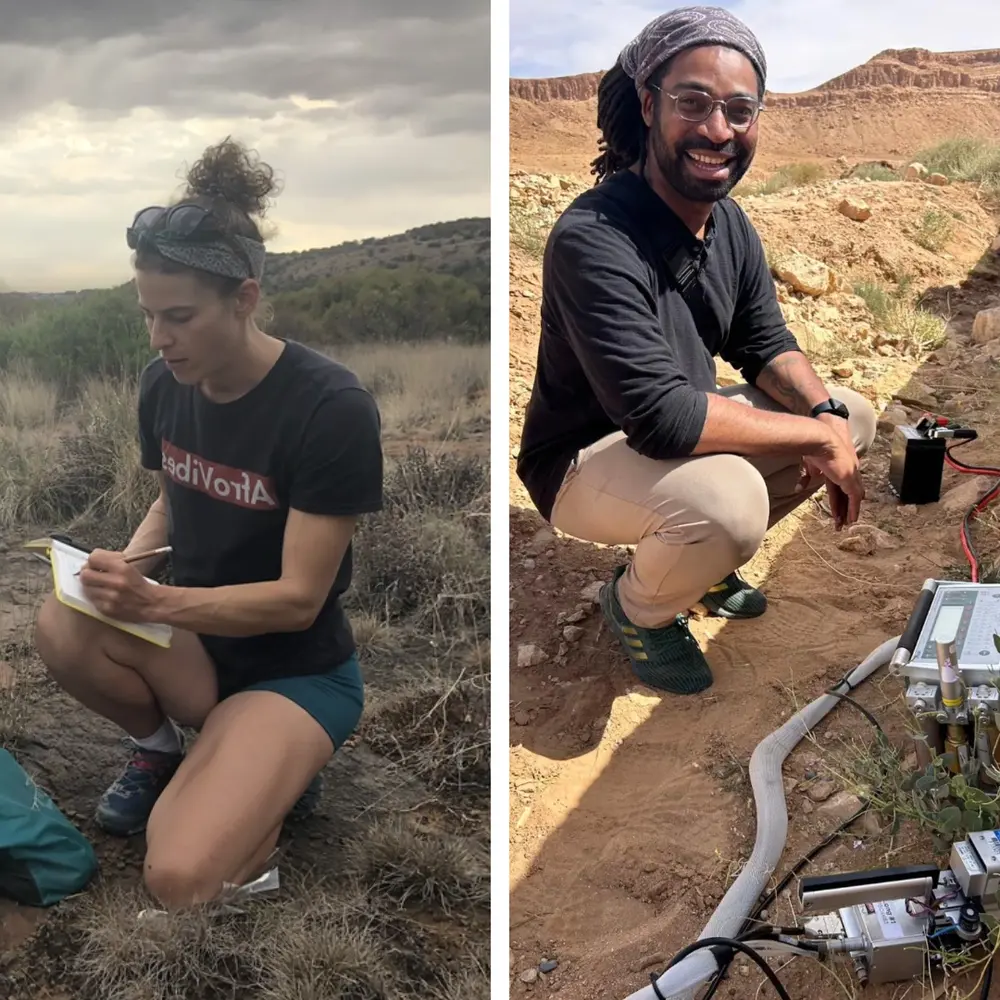
A new publication by Assistant Professor in Plant Biology Rose Marks and Institute for Genomic Biology (IGB) postdoctoral fellow Shawn Abrahams is reshaping how scientists understand one of nature’s most remarkable survival strategies: the ability of some plants to dry out almost completely before managing to come back to life.
The study, published in American Journal of Botany explores how this rare trait, known as desiccation tolerance, has evolved across hundreds of millions of years. Marks and Abrahams collaboration brought together expertise in plant biology, evolution, and systems science.
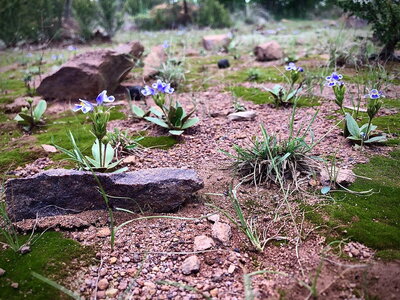
As most things in life, water is essential for plants and most die quickly when they dry out. But a small group of plants called “resurrection plants” can survive extreme dehydration and recover within hours of being rewatered. Understanding how they do this could have far-reaching impacts, from improving crop resilience to helping ecosystems adapt to global change. As droughts become more frequent and severe, insights into how plants tolerate water loss could help scientists develop crops that are better equipped to survive in changing environments and inform conservation strategies in vulnerable ecosystems.
The research shows that the ability to survive drying out is not new. In fact, the earliest land plants likely had this ability. However, over time most lost this unique feature as they evolved new structures including roots, vascular systems, and waxy leaves. These new features helped them avoid drying out and made plants more efficient at holding onto water, reducing the need to tolerate complete drying.
Despite this evolution, the team found that while most plants no longer survive drying as full-grown organisms, they did retain the necessary biological “tools” in their seeds and spores. These act as a kind of evolutionary backup system, preserving the ability to survive harsh conditions should the situation arise. In habitats that are dry, some plants have been able to reuse these tools and regain desiccation tolerance in their leaves and stems.
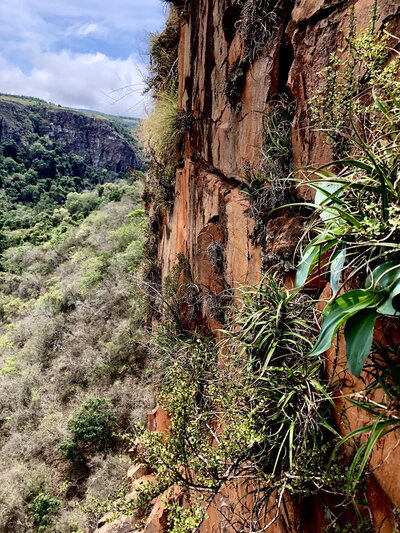
Rather than viewing this ability as simply present or absent, Marks and her team propose that desiccation tolerance works more like a toolkit made up of different parts. While some of these parts are ancient and shared across plant groups, others evolve in response to specific environmental pressures. This new framework explains why the trait is rare but has appeared multiple times across many types of plants.
This research also highlights the collaborative environment at Illinois. Marks worked closely with Abrahams, whose postdoctoral research at IGB focuses on integrating biological data across scales. Together, they developed a broader evolutionary framework that connects plant structure, genetics, and environmental conditions.
By uncovering how plants lost and re-gained the ability to survive extreme dehydration, Marks’s work opens new avenues for studying plant resilience. Future work could explore how these mechanisms might be applied to crops or used to better predict how plant communities will respond to a changing climate. The study offers a powerful reminder that even traits that seem lost to time may still persist beneath the surface, ready to reemerge when the conditions are right.