2026 Annual Newsletter

2026 Annual Newsletter
Welcome from the Director
Image
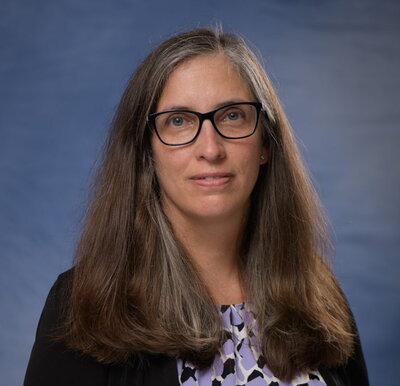
Dear Alumni and Friends,
The 2025-2026 academic year was marked by many successes in teaching, research, and community engagement. I want to highlight some exceptional achievements: alumnus Erin Murphy was honored with the 2025 Cozzarelli Prize for scientific excellence for her outstanding research paper. We also celebrate two remarkable student stories, with one Integrative Biology Honors student earning the Udall Scholarship, and another having their undergraduate research published as they continued on with us in our BSLAS+MS in IB program. New initiatives within the College of LAS are supporting innovative courses and programs, while efforts like PURSUE LAS are opening doors for more undergraduates to engage in transformative research earlier in their academic careers.
Additionally, our newer faculty continues to stand out. Thanks to the dedication of Plant Biology faculty member Ya Min (Minya), IB103: Introduction to Plant Biology received a much-needed restructure and funding to enhance the course experience. Tigga Kingston earned an investiture, recognizing her outstanding contributions in mammal behavior, ecology, and conservation. We also mourn the passing of Stephen Long; a valued member of our community whose legacy continues to inspire us.
Finally, I’m pleased to share that our biology photo competition returned with great enthusiasm. We received over 100 submissions from faculty, staff, postdocs, and students. For the first time, we opened the competition to alumni, who not only submitted entries but also served as judges. The winning artwork is now proudly displayed on the second floor of the Natural History Building near our advising offices, with runners-up featured in our learning center.
As always, with this virtual format, we hope you enjoy interacting with our website and return often for updates. In our increasingly connected world, we continue to find new ways to engage with you, our alumni. This year, we launched the inaugural Biology March Madness bracket, where our graduate RSOs showcased the scariest organisms for voting. The tournament was shared widely on social media. If you missed it, be sure to follow our pages to participate next year.
None of these accomplishments would be possible without the generous support of our donors. Your gifts, no matter the size, enable student scholarships, faculty awards, and vital infrastructure improvements. We are especially proud to expand opportunities for students to study abroad by increasing course offerings and providing scholarships to help offset costs.
Please stay in touch. Visit us at 286 Morrill Hall whenever you’re in Urbana–Champaign. Connect online at sib@illinois.edu and engage with us on Instagram, Bluesky, LinkedIn, or Facebook. Here’s to another remarkable year of scientific discovery, educational excellence, and community.
With immense gratitude,
Image

Director, School of Integrative Biology
University of Illinois Urbana–Champaign
Department of Entomology –May Berenbaum and Acting Head Brian Allan
Image

At least for some insects in Illinois, the 2025-2026 academic year was a good one; the number of state-threatened and state-endangered bee species gaining legal protection, for example, increased to 12, up from one (the rusty patched bumble bee Bombus affinis) in 2017. In fact, in 2026, Governor JB Pritzker signed legislation establishing Bombus auricomus, the black and gold bumble bee, as the Illinois State Bee, which is appropriate given that it can be found throughout the state, including in UIUC's Trelease Woods and Meadowbrook Park.
In terms of administrative news, May Berenbaum completed her 34th year as Head of Entomology, breaking records both for the College of Liberal Arts and Sciences at Illinois and for departments of entomology nationwide (narrowly surpassing the record set by Edith Patch, department head at University of Maine from 1904 to 1937). Not coincidentally, scheduled for the November 2026 Entomological Society of America meeting in Columbus, Ohio, a symposium marking that anniversary is taking place; look in your program book for "What’s the Buzz? An Entomological History of May Berenbaum’s 34 Years of Service as Department Head." Sincere thanks to Brian Allan and Andy Suarez for organizing the symposium (and, if you're wondering, May was the inspiration for, but not the source of, the pun in the title). As well, sincere thanks to Brian for serving as Acting Head this past year and for taking on the role of Department Head starting in August!
Speaking of campus leadership, this year Gene Robinson completed a historic run as Director of the Carl R. Woese Institute for Genomic Biology (since 2001) and was recently appointed as the new Director and CEO of the Discovery Partners Institute in Chicago. May Berenbaum's run as Director of the Center for Advanced Study is barely beginning by comparison—as of April 1, she has been Director for only five years (the record to beat is held by linguistics Ladislav Zgusta, Director of CAS from 1986 to1996). In terms of noteworthy department visitors, Adam Dolezal, Alex Harmon-Threatt, and Gene Robinson hosted a visit by U.S. Senate Democratic Whip Dick Durbin to discuss critical bee research at the University of Illinois and to sample local honey from the bee lab. By the way, if you're keeping track of political power wielded by bees nationally, within the ranks of the current House of Representatives is Democratic Representative Jim Hines of the fourth Congressional district of Connecticut, an avid beekeeper.
In terms of faculty achievements, Esther Ngumbi was promoted from assistant professor to associate professor with indefinite tenure and Alex Harmon-Threatt was promoted from associate professor to professor. We gained a new assistant professor—Matt Doremus joined our faculty in 2025, after receiving a PhD degree from the University of Arizona and a postdoctoral appointment at the University of Kentucky. His research on arthropod-microbe symbioses continues a long tradition of departmental research, dating back to 1992, with Hugh Robertson's pioneering work on cytoplasmic incompatibility (e.g., O'Neill et al. 1992, https://www.pnas.org/doi/abs/10.1073/pnas.89.7.2699).
Our faculty, students, and alumni continue to receive awards and recognition of all sorts. Adam Dolezal received the Pioneer Award from the Illinois State Beekeepers Association, designed "to recognize individuals or entities which have through their actions have contributed to and supported beekeeping in the health and well-being of honey bees through research, advancement of methods, technology and sharing of knowledge." In 2025, Andy Suarez, Jeffrey S. Elowe Professor of Integrative Biology and Illinois entomology department faculty member, received multiple honors—election as Fellow of the Entomological Society of America and recipient of the Distinguished Naturalist Award from the American Society of Naturalists. Brian Allan was inducted into Sigma Xi, the Scientific Research Honor Society, joining faculty alumni Sydney Cameron and Jim Whitfield and current faculty members Gene Robinson, Esther Ngumbi, Andy Suarez, Joe Zhou, and May Berenbaum. May received the Wigglesworth Memorial Lecture and Award from the Royal Entomological Society (presented at the 2025 meeting in Glasgow) and joined Charles Darwin as one of the signers of the Society's Obligations book. Gene Robinson was honored with the Campus Award for Excellence in Faculty Leadership and was inducted into the American Philosophical Society, the oldest learned society in the United States, founded by Benjamin Franklin in 1743.
Joining faculty in receiving recognition, the Entomology Graduate Student Association (EGSA) collectively received the Campus Award for Excellence in Public Engagement for a student team. EGSA of course is responsible for the lion's share (or should that be antlion's share?) of work involved in holding our annual Insect Fear Film Festival (about to enter its 44th year in February 2027). EGSA, by the way, in the past two years sent teams to the EntSoc Entomology Games, formerly known as the Linnaean Games, and, with the help of faculty coach Matt Doremus, managed to score historic victories—first place in the North Central Branch competition in both 2025 and 2026 and third place in the 2025 National Game. If this team places first in the 2026 National Game, it will be the first time since 2009 that the University of Illinois has taken home the top prize.
We're looking forward to seeing alumni and friends of Illinois Entomology at the Entomological Society of America meeting in Columbus, Ohio this November, not just at the mixer but also at the “What’s the Buzz?" symposium!
Department of Evolution, Ecology, and Behavior – Becky Fuller
Image
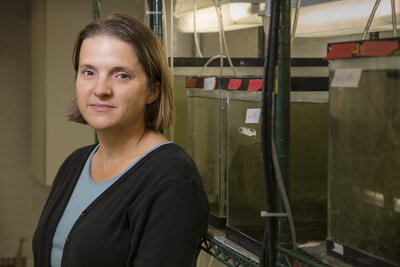
The Department of Evolution, Ecology, and Behavior (EEB) had a productive year. Despite recent disruptions to science funding, faculty and students remain united in their desire to understand the relationship between environmental change and its impact on organisms across ecological and evolutionary timescales.
We are also delighted to welcome three new faculty to EEB this year. Eric Gulson-Castillo and Teresa Pegan join us this August, both coming from postdoctoral positions studying bird migration. Eric studies the sensory basis of bird migration, including magnetoreception. Teresa studies the genomic and life history consequences of long-distance migration in songbirds. Brent Hawkins joins us in January from a postdoctoral fellowship at Boston Children’s Hospital and Harvard Medical School. Brent uses zebrafish to uncover the developmental genetic mechanisms behind major evolutionary transitions in vertebrate anatomy, including work showing that zebrafish fins retain a latent capacity to develop limb-like bones. Together, they bring exciting new strength in sensory ecology, genomics, and evolutionary development to our department. We also welcomed six new incoming graduate students for Fall 2026, a strong cohort given that enrollments were down across much of the country this year.
Our other big news is that Dr. Tigga Kingston was formally invested this year as the inaugural Shelford-Pitelka-Batzli Professor in Mammalian Ecology, a named professorship generously endowed by Dr. George Batzli and his family. Tigga is a global leader in bat conservation. She founded and directs the Southeast Asian Bat Conservation Research Unit, helped found the Global Union of Bat Diversity Networks, and chairs the Old World component of the IUCN Species Survival Commission for bats. In 2023, a newly discovered bat species, Hipposideros kingstonae, was named in her honor. Her investiture also drew attention to the legacy behind her professorship’s name: Victor E. Shelford, the father of modern ecology and founder of both the Ecological Society of America and what became The Nature Conservancy. Victor Shelford was a former EEB professor, and his spirit of rigorous field biology was very much present in the room. Tigga also received a Fulbright this year to continue her research on bats in Southeast Asia.
It was also a year of strong recognition for our faculty.
- Dr. Julian Catchen received an LAS Conrad Professorial Scholar Award. Julian developed and maintains Stacks, a widely used software package for population genomics from RAD sequencing data, and his lab combines this bioinformatics expertise with research on fish genome evolution.
- I had the honor of serving as President of the American Society of Naturalists. In my presidential address, I discussed 20+ years of research on sensory drive in killifish and reminded everyone that Sewall Wright, one of the architects of the modern synthesis, received his M.S. from our department at the University of Illinois.
EEB continues to thrive as a dynamic and supportive community. Our weekly EEB Colloquium remains a central gathering point. Every Friday at 9:00 a.m., we meet to share bagels, coffee, and cutting-edge science from students, faculty, and guests from across academia, government, NGOs, and industry. Our motto remains: good things happen when we talk to one another.
Thank you for your continued support. Please stop by if you’re in town—everyone is always welcome at the EEB Colloquium.
Sincerely,
Becky Fuller
Professor and Head
Department of Evolution, Ecology, and Behavior
Department of Plant Biology – Katy Heath
Image
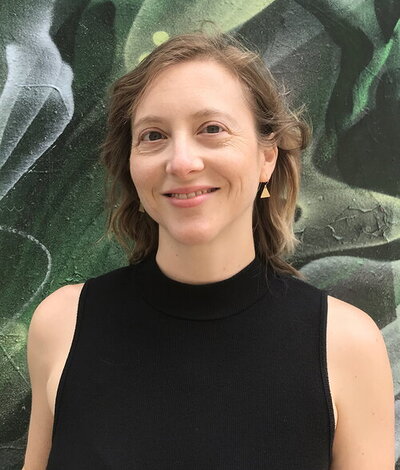
The 2025/26 academic year asked a great deal of us, but as always our staff, students, postdocs, and faculty rose to meet it. We saw extraordinary recognition for our science, made discoveries across the breadth of plant biology, and said goodbye to one of the towering figures of our field who was a close mentor and friend to many in our department.
This was a banner year for photosynthesis and plant physiology research, a strength that has defined Plant Biology at Illinois for generations. Professor Tracy Lawson and Professor Emeritus Donald Ort were both named to the 2025 Clarivate Highly Cited Researchers list, recognizing scientists whose work ranks among the top 1% by citation worldwide. Lawson and Professor Emeritus Govindjee were also ranked among the world’s top seven photosynthesis scholars of the past five years. And Professor Andrew Leakey’s leadership in bioenergy and development of bioenergy grass miscanthus drew national attention, including a feature in the Chicago Tribune.
It is alongside that same recognition that we mourn the passing of Dr. Stephen P. Long in September, a pioneer of photosynthesis research and engineering photosynthesis to feed the world. His intellect and generosity shaped this department and our discipline for a long time, and his absence is felt daily. In November, colleagues, collaborators, and mentees from around the world gathered to celebrate his life and legacy.
There was much to celebrate among our colleagues as well. Assistant Professor Steven Burgess was named a Lincoln Excellence for Assistant Professors (LEAP) Scholar by the College of LAS, recognition of an early-career researcher and teacher already making an outsized mark. We were also thrilled that Heather Lash, Assistant Director of Controlled Environment Facilities, received an LAS Academic Professional Award for her amazing work leading our plant growth facilities.
Our discoveries this year spanned the full sweep of plant biology. Assistant Professor Ya Min (Minya) revealed new principles for how flowers grow and organize themselves, and Associate Professor Li-Qing Chen showed how plants move sugar to keep growing under stress. Assistant Professor Rose Marks traced the biology of “resurrection plants” in work that is reshaping how we understand drought tolerance.
Plant Biology trainees (undergraduates, graduate students, and postdoctoral scholars) are at the bench, in the field, and at the computer every day driving these discoveries while they develop their own skillsets, advance their own scientific careers, and even mentor the more junior trainees coming up behind them. I like to think of mentor-mentee relationships, our research labs, and even whole departments like symbioses where scientists of different expertise, personality traits, interests, and strengths come together to build something bigger and more profound than we could ever build alone.
Plant science has never been more essential to meeting the challenges facing humanity. Curiosity-driven research—the work of understanding the world for its own sake—builds the firm foundation of knowledge on which innovations in agriculture, the environment, and human health are raised. Those are exactly the questions we pursue every day in Plant Biology: how plants evolve, how they interact with other organisms, and how we can read and rewrite their genetics. Come visit us!
Here’s to another year of gathering data, graduating students, growing the next generation, and green things.
We want to hear from you!
SIB is interested in what our alumni are up to. Please take the time to fill out the provided form so we can keep in touch and share your achievements.
Getting transdisciplinary: reflections from Professor Jim Dalling on co-teaching the CHEM199, Chemistry of Coffee
Discover the insights and reflections of Professor Jim Dalling as he shares his experience co-teaching CHEM 199: Chemistry and Coffee. This transdisciplinary course blends science and curiosity in unique ways—inviting you to explore what Jim uncovered about teaching, learning, and the many connections something as simple as coffee brings together.

Alumni Story: Erin Murphy wins 2025 Cozzarelli prize for scientific excellence for a research paper
Driven by curiosity and a passion for marine life, Erin Murphy, alumna of the School of Integrative Biology (B.S., 2013), has led groundbreaking research revealing the widespread ingestion of plastics by ocean animals. Her innovative work not only advances scientific understanding but also drives meaningful action to protect our oceans. This dedication earned her the prestigious 2025 Cozzarelli Prize for Scientific Excellence.

Illinois junior receives prestigious Udall Scholarship
Integrative Biology Honors junior R. Fisher Houston has been awarded the prestigious Udall Scholarship, recognizing outstanding leadership and commitment to environmental and Native American issues. This honor highlights the university’s dedication to fostering the next generation of leaders in sustainability and social justice. R. Fisher Houston’s achievement reflects the strong support and opportunities available at Illinois for students passionate about making a positive impact in their communities and beyond.

Former undergraduate researchers help uncover how plants respond to multiple environmental stressors
Michael Somerville and Minxing Zhu did their undergraduate research in the Ngumbi lab and played a key role in uncovering how plants respond to multiple environmental stresses simultaneously. Their contributions highlight SIB’s commitment to hands-on research experiences that prepare students for impactful scientific careers. This work advances our understanding of plant resilience, with potential implications for agriculture and ecosystem management in a changing climate.

Stay informed on how Illinois is navigating recent federal funding changes.
New funding assists in refresh of IB 103: Introduction to Plant Biology
Fueled by a commitment to inspire curiosity and deepen understanding, new funding is enabling a comprehensive refresh of IB 103: Introduction to Plant Biology. Under the guidance of Dr. Ya Min (Minya), the course now integrates art and cutting-edge technology to create an engaging, interdisciplinary learning experience. These updates aim to equip the next generation of biologists with innovative tools and perspectives to tackle future challenges in plant science and beyond.

Changing minds, how entomology graduate students are inspiring future scientists
This year, Entomology is proud to celebrate the incredible efforts of our Entomology Graduate Student Association (EGSA) members, who are inspiring the next generation of scientists through dynamic outreach and education. Their passion and dedication are sparking curiosity and driving impact in the fascinating world of insects. Learn more about how EGSA is making the world of insects more approachable on campus and in the community.

Tigga Kingston named inaugural Shelford-Pitelka-Batzli Professor in Mammalian Ecology
Dr. Tigga Kingston, a recent addition to EEB, has been honored as the inaugural Shelford-Pitelka-Batzli Professor of Mammalian Ecology. This distinguished appointment recognizes her innovative research on mammal behavior, ecology, and conservation, areas that are vital to understanding and protecting biodiversity in a rapidly changing world. Her work exemplifies the Department’s ongoing commitment to cutting-edge science and its impact on global environmental challenges, continuing the University of Illinois’s tradition of excellence in biological research.

Remembering Stephen Long
The Department of Plant Biology and The School of Integrative Biology mourns the loss of Stephen Long, a visionary scientist whose curiosity and passion forever changed the landscape of plant biology. Beyond his groundbreaking research, Stephen was a cherished mentor and friend to many in our community. His legacy of innovation and kindness continues to inspire us all as we carry forward his commitment to advancing science for the betterment of society.

Keep up on the latest faculty, alumni, and student news!

Alumni News
Catch up with fellow SIB alumni! See where their paths have led, from groundbreaking research to unique careers that are making a difference.

Faculty News
Stay connected and inspired—discover the latest achievements, innovations, and insights from your former professors and colleagues. See how they're shaping the future and making headlines!

Student News
Check out what today’s IB students are up to! From exciting research to real-world impact, their stories are shaping the future of science.

SIB Awards and Honors
Not able to make this year's awards ceremony? We have you covered! In addition to highlighting everyone in SIB that won awards this year, we also brought back the World of Biology Photo Competition, with the winners art displayed in the Natural History Building and on our website.
New faculty and staff

Erinn Dady – Assistant Director of the Integrative Biology Merit Program. I am excited about my new role as I was privileged to serve as a Merit teaching assistant during my academic career, and I appreciate what this program offers. I am eager to support student success within SIB and across campus. Previously, I worked in local C-U restaurants as a baker and chef before going back to school and completing my A.S. from Parkland College. I then earned my B.S. in Earth, Society, and Environmental Sustainability, and my M.S. in Entomology, both from the University of Illinois, Urbana-Champaign. Throughout my undergraduate and graduate studies, I performed research on plant-insect interactions with Dr. Esther Ngumbi. Following my passion for food security, I focused my research on the effects of combinatorial stressors (insect herbivory and flooding) in crop plants. In my free time I enjoy being out in nature, gardening, and making art.

Ma. Gloria V. Talavera – Office Manager for EEB and PEEC, located in 320 Morrill Hall. I assist the heads of EEB and PEEC in managing the day-to-day operations of their programs. As the Graduate Program Contact, I help our graduate students with their various academic needs and requests. I am a retired faculty member from the University of the Philippines (Business School), where I spent 30 years. This transition to a new world of biology is a refreshing treat for a second career. Outside of work, I love indoor gardening, singing, and watching different genres of TV series.
Promotions

Dr. Mark Lara has been selected as the 2025–2026 Helen Corley Petit Scholar, a distinction awarded to early-career faculty demonstrating excellence in research and scholarship. Lara's research addresses the fundamental effects of space on dynamic species-to-community interactions that govern function.

Dr. James O’Dwyer has been recognized with the 2025 Campus Distinguished Promotion Award and named the 2025–2026 Dean’s Distinguished Professorial Scholar, honoring his exceptional contributions to theoretical ecology and academic leadership. O'Dwyer's research studies how different species interact and change over time in nature by using a mix of theory, experiments, and data to understand ecological communities.

Undergraduate Programs
SIB is where we foster a dynamic academic environment dedicated to the exploration and understanding of life's complex systems. Our undergraduate programs are ever evolving, offering an exciting array of opportunities for students, researchers/faculty, and staff.

Graduate Programs
SIB continues to shape the next generation of scientific leaders through its outstanding graduate programs. Our students engage in research across ecology, evolution, behavior, genomics, and more—guided by world-class faculty and supported by a collaborative, interdisciplinary environment.
We invite you to learn more about how our graduate programs are preparing tomorrow’s innovators and consider how your continued support helps make their success possible.

Entomology
Illinois's Entomology Department has a long history of its alumni forging successful careers at a wide range of institutions, including land grant universities, small private liberal arts colleges, federal laboratories, zoos, museums, and consulting firms.

Evolution, Ecology, and Behavior
EEB focuses on understanding the natural world through research and education in evolutionary biology, ecological dynamics, and behavioral science. The department emphasizes interdisciplinary approaches, fostering insights into biodiversity, organismal interactions, and adaptive strategies across a wide range of ecosystems.

Plant Biology
Illinois's Plant Biology Department is a leader in exploring the complexities of plant life, from molecular mechanisms to ecosystem dynamics. The department works to advance the understanding of plant biology to address global challenges like global change, food security, and biodiversity conservation.